IB Business Toolkit BCG Matrix
The complete guide to the IB Business Toolkit. Learn about BCG Matrix - A company's Product Portfolio analysis for IB Business Management students.
IB BUSINESS MANAGEMENTIB BUSINESS MANAGEMENT SLIB BUSINESS MANAGEMENT HL
Lawrence Robert
5/26/20264 min read
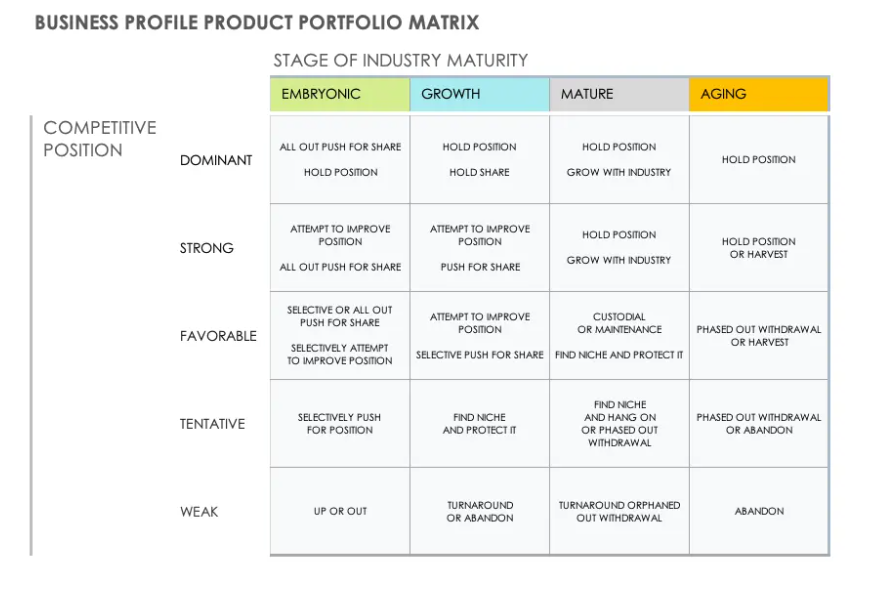
Toolkit 4: Boston Consulting Group (BCG) Matrix
Target question:
What is the Boston Consulting Group (BCG) Matrix in IB Business Management?
Product Portfolio Analysis Framework
The Boston Consulting Group Matrix provides a strategic system for managing product portfolios. It categorises products based on market growth rate and relative market share. Bruce Henderson developed this model at BCG in 1970, creating a tool for allocating resources across multiple products or business units. The matrix serves to guide strategic decisions about investment, divestment, and resource reallocation optimising the overall performance of a business product portfolio.
BCG Matrix Four Categories:
Stars - High market share in high-growth markets:
Market leaders in expanding industries
Require substantial investment maintaining competitive position
Generate significant revenue but consume cash funding growth
Future Cash Cows as markets mature
Strategic priority: Defend and invest for continued dominance
Stars represent the ideal position combining strong competitive advantage with attractive market dynamics. However, rapid growth requires continuous investment in capacity, innovation, and marketing. Netflix's streaming service exemplified Star status during its explosive subscriber growth requiring infrastructure investment while generating increasing revenue.
Cash Cows - High market share in low-growth markets:
Dominant products in mature, stable industries
Generate substantial profits and cash flow
Require minimal investment as growth stabilised
Fund investment in Stars and Question Marks
Strategic priority: Harvest cash while maintaining position
Cash Cows provide the financial foundation for funding portfolio diversification. Cash Cows are usually established brands in mature categories generating reliable profits without requiring major investment. Coca-Cola's carbonated soft drinks is a good example of a Cash Cow that generates cash for supporting expansion into healthier beverage categories.
Question Marks (Problem Children) - Low market share in high-growth markets:
Developing products in attractive markets
Uncertain future requiring strategic assessment
Consume significant finance (cash) attempting to gain market share
May become Stars with adequate investment
May become Dogs if unable to achieve scale
Strategic priority: Selective investment or divestment
Question Marks require careful evaluation as to whether investing in them can achieve a competitive position or whether resources should be better deployed elsewhere. Tesla's energy storage business initially represented a Question Mark in a rapidly growing renewable energy storage market and required assessment of competitive viability.
Dogs - Low market share in low-growth markets:
Weak positions in unattractive markets
Generate minimal profits or losses
Tie up resources better deployed elsewhere
Limited strategic value to portfolio
Strategic priority: Divest or harvest
Dogs typically warrant divestment unless they are contributing strategic value through complementary offerings, brand support, or customer retention. Many established companies maintain marginal products for complementing their customers despite their limited profitability.
Strategic Resource Allocation
The BCG Matrix guides resource allocation based on strategic position:
Balanced Portfolio Strategy - Optimal portfolios balance all four categories. Cash Cows fund Stars' growth requirements and priority Question Mark investments. Successful Question Marks transition to Stars replacing aging Cash Cows as Stars eventually mature. Dogs divested or harvested contribute minimal resources.
Investment Decisions - Matrix analysis determines resource allocation priorities. Stars warrant continued investment to maintain their competitive position. Selective Question Marks receive funding if their market potential is tested. Cash Cows require maintenance investment to preserve their profitability. Dogs receive minimal resources pending divestment decisions.
Succession Planning - BCG highlights product lifecycle dynamics requiring continuous portfolio renewal. As Cash Cows eventually decline, organisations need Stars transitioning into future Cash Cows. Failure to invest in Stars and lack of promising Question Marks creates future portfolio imbalance without growth engines or cash generators.
Boston Consulting Group Matrix Limitations
BCG Matrix faces important criticism:
Oversimplification - The two-dimensional framework reduces a complex strategic reality into simplistic categories. Market share and growth represent important factors but ignore competitive intensity, barriers to entry, technological disruption, sustainability considerations, and other strategic dimensions.
Static Analysis - The matrix provides a general snapshot but markets evolve continuously. Products transition between quadrants as growth rates change and competitive positions shift. Dynamic market analysis requires continuous reassessment beyond single-point initial evaluations.
Market Definition Challenges - Market share calculations depend on general market boundary definitions. Narrow market definitions boost artificially apparent market share; broad definitions diminish it. Disagreements about the scope of the market affect product categorisation and strategic implications.
Growth Obsession - General frameworks undervalue stable, profitable businesses in mature markets. Some low-growth markets remain highly profitable with minimal competitive intensity, while high-growth markets may never achieve profitability.
Modern BCG Applications: Modern portfolio management adapts BCG principles while addressing limitations through:
Multi-dimensional analysis incorporating additional strategic factors beyond growth and share
Dynamic modelling tracking portfolio evolution over time
Digital business unit analysis applying BCG to platform business models
Sustainability integration evaluating environmental and social performance alongside financial metrics
Ecosystem thinking recognising interdependencies between the different portfolio elements
Example company & Boston Consulting Group Matrix
Researched example: Ecosip
Find Support For Practicing The Boston Consulting Group Matrix
The IB Business Management Activity and Case Study Book includes a full Module 6 section with case studies across all 15 tools - Swot Analysis, Ansoff Matrix, Steeple Analysis, Boston Consulting Group (BCG) Matrix, Business Plan, Decision Trees, Descriptive Statistics, Circular Business Models, Gantt Charts (HL only), Porter’s Generic Strategies (HL only), Hofstede’s cultural dimensions (HL only), Force Field Analysis (HL only), Critical Path Analysis (HL only), Contribution (HL only), Simple Linear Regression (HL only) (All with worked exam responses and marking schemes aligned to every assessment objective.)
Explore IB Business Management And The Boston Consulting Group Matrix
IB Business Management Main Hub your daily IB Business Management resource
IB Business Management Boston Consulting Group Matrix (BCG) in the Business Management Toolkit
IB Business Management Paper 1 Exam Review Hub find Boston Consulting Group Matrix (BCG) exam questions in Paper 1
IB Business Management Paper 2 Exam Review Hub study Boston Consulting Group Matrix (BCG) exam questions in Paper 2
IB Business Management Paper 3 Exam Review Hub explore Boston Consulting Group Matrix (BCG) exam questions in Paper 3
IB Business Management Activity Book: Explore and practice The Business Management Toolkit including Boston Consulting Group Matrix (BCG), Unit 1 Swot Analysis, Unit 2 Ansoff Matrix, Unit 3 Steeple Analysis, Unit 4 Boston Consulting Group (BCG) Matrix, Unit 5 Business Plan, Unit 6 Decision Trees, Unit 7 Descriptive Statistics, Unit 8 Circular Business Models, Unit 9 Gantt Charts (HL only), Unit 10 Porter’s Generic Strategies (HL only), Unit 11 Hofstede’s cultural dimensions (HL only), Unit 12 Force Field Analysis (HL only), Unit 13 Critical Path Analysis (HL only), Unit 14 Contribution (HL only), Unit 15 Simple Linear Regression (HL only) activities, exam questions, case studies, IB Standard model answers and IB marking schemes.
Read Next: IB Business Management Toolkit The Business Plan
© Theibtrainer.com 2012-2026. All rights reserved.
Legal
Have a Tip? Send us a tip using our anonymous form