IB Business Toolkit Business Plan
The complete guide to the IB Business Toolkit. Learn about The Business Plan - A tool used for attracting funds. For IB Business Management students.
IB BUSINESS MANAGEMENTIB BUSINESS MANAGEMENT SLIB BUSINESS MANAGEMENT HL
Lawrence Robert
5/26/20264 min read
Toolkit 5: Business Plan
Target question:
What is a Business Plan in IB Business Management?
Business plans provide structured documents that include business concepts, strategies, and financial projections for new businesses, ventures or major strategic initiatives. Effective business plans serve multiple purposes: clarifying strategic thinking, securing financing from investors or lenders, attracting talented employees, and establishing operational roadmaps guiding task execution. While traditional lengthy business plans are no longer used by lean start-ups that emphasise experimentation, comprehensive business planning remains essential for attracting significant investment that often require stakeholder alignment and resource commitment.
Essential Business Plan Components:
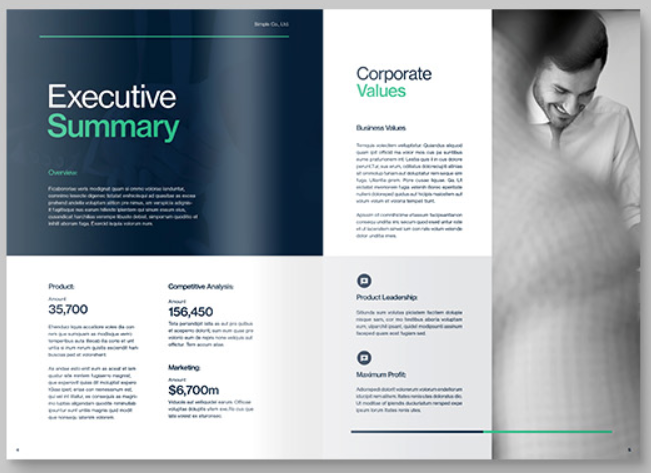
Executive Summary - Concise overview capturing key elements:
Business concept and value proposition
Target market and customer segments
Competitive advantage and differentiation
Financial highlights and funding requirements
Management team qualifications
Strategic milestones and timelines
Executive summaries appear first on the document but it should be the last part you write in a business plan. They synthesise the complete business plan into a compelling introduction that tries to catch attention and determines whether readers want to read on or not.
Company Description - Business overview establishing context:
Mission, vision, and core values
Legal structure and ownership
Location and facilities
Historical background for existing businesses
Strategic objectives and long-term goals
Key success factors and critical assumptions
Market Analysis - Comprehensive market intelligence:
Industry overview and market size
Target customer demographics and psychographics
Customer needs and purchasing behaviours
Market trends and growth projections
Regulatory environment and entry barriers
Market segmentation and positioning strategy
Competitive Analysis - Competitive landscape assessment:
Direct and indirect competitors identification
Competitive strengths and weaknesses
Market share distribution
Competitive advantages and differentiation strategies
Barriers to competitive imitation
Future competitive threats
Organisation and Management - Leadership and structure:
Organisational structure and reporting relationships
Management team backgrounds and qualifications
Board of directors and advisors
Key personnel and staffing plans
Compensation structures and incentive alignment
Professional service providers (legal, accounting, consulting)
Products and Services - Offering details:
Detailed product or service descriptions
Features and benefits articulation
Intellectual property and proprietary advantages
Product lifecycle and development roadmap
Pricing strategy and rationale
Supplier relationships and sourcing
Marketing and Sales Strategy - Customer acquisition approach:
Marketing mix strategy (Seven Ps)
Brand positioning and messaging
Marketing channels and tactics
Sales process and distribution strategy
Customer relationship management
Marketing budget and expected returns
Financial Projections - Comprehensive financial forecasts:
Pro forma income statements (3-5 years)
Key financial assumptions
Sensitivity analysis and scenarios
Funding requirements and capital structure
Exit strategy for investors
Appendices - Supporting documentation:
Management team resumes
Product specifications
Legal documents
Letters of intent from customers
Partnership agreements
Adapting Business Plans for Different Audiences
Business plans require different versions for different stakeholder groups:
Investor Pitch Decks - Venture capital and angel investor audiences favour short presentations emphasising market opportunity, competitive differentiation, scalability potential, management team quality, and exit opportunities. Financial projections and focus on growth metrics and return on investment are preferred to break-even timelines or profitability.
Bank Loan Applications - Lenders prioritise cash flow projections covering debt service, collateral security, management experience, and personal guarantees. Conservative financial projections emphasising stable revenue. Profit margins, and debt coverage ratios address lender risk concerns.
Internal Strategic Plans - Plans guiding internal execution emphasise operational details, implementation timelines, resource requirements, performance metrics, and accountability structures. Internal plans usually provide greater details on procedures and how execution will take place comparing to business plans looking for external funding.
Modern Business Planning
Digital transformation has changed business planning methodology:
Lean Start-up Methodology - Eric Ries popularised the lean start-up approach replacing lengthy business plans with Business Model Canvas that document hypotheses that require testing. Minimum viable products (MVPs) enable rapid experimentation. They gather customer feedback before committing the investment of major resources.
Agile Planning - By recognising environmental uncertainty, agile planning emphasises adaptive strategies over rigid long-term commitments. Rolling forecasts replace static annual plans. Scenario planning explores multiple potential future outcomes rather than single predictions.
Digital Business Models - Platform businesses, subscription services, and digital marketplaces require different planning approaches than traditional businesses. Network effects, viral growth, and scalability dynamics demand growth-focused planning and forecasting rather than the conventional emphasis on profitability.
Sustainability Integration - Modern business plans increasingly incorporate environmental and social considerations alongside financial objectives. Stakeholders expect that current businesses address climate impact, social equity, and management quality. B Corporation certification and social enterprise models require the integration of explicit social missions.
Example company & Business Plan
Researched example: Ecosip
Find Support For Practicing Business Plans
The IB Business Management Activity and Case Study Book includes a full Module 6 section with case studies across all 15 tools - Swot Analysis, Ansoff Matrix, Steeple Analysis, Boston Consulting Group (BCG) Matrix, Business Plan, Decision Trees, Descriptive Statistics, Circular Business Models, Gantt Charts (HL only), Porter’s Generic Strategies (HL only), Hofstede’s cultural dimensions (HL only), Force Field Analysis (HL only), Critical Path Analysis (HL only), Contribution (HL only), Simple Linear Regression (HL only) (All with worked exam responses and marking schemes aligned to every assessment objective.)
Explore IB Business Management And Business Plans
IB Business Management Main Hub your daily IB Business Management resource
IB Business Management Business Plan in the Business Management Toolkit
IB Business Management Paper 1 Exam Review Hub find Business Plan exam questions in Paper 1
IB Business Management Paper 2 Exam Review Hub study Business Plan exam questions in Paper 2
IB Business Management Paper 3 Exam Review Hub explore Business Plan exam questions in Paper 3
IB Business Management Activity Book: Explore and practice The Business Management Toolkit including Business Plans, Unit 1 Swot Analysis, Unit 2 Ansoff Matrix, Unit 3 Steeple Analysis, Unit 4 Boston Consulting Group (BCG) Matrix, Unit 5 Business Plan, Unit 6 Decision Trees, Unit 7 Descriptive Statistics, Unit 8 Circular Business Models, Unit 9 Gantt Charts (HL only), Unit 10 Porter’s Generic Strategies (HL only), Unit 11 Hofstede’s cultural dimensions (HL only), Unit 12 Force Field Analysis (HL only), Unit 13 Critical Path Analysis (HL only), Unit 14 Contribution (HL only), Unit 15 Simple Linear Regression (HL only) activities, exam questions, case studies, IB Standard model answers and IB marking schemes.
Read Next: IB Business Management Toolkit Decision Trees
© Theibtrainer.com 2012-2026. All rights reserved.
Legal
Have a Tip? Send us a tip using our anonymous form