
IB Business Pricing Methods
Why did Wendy's get roasted for surge pricing burgers? Learn IB Business pricing methods through Tesco's price wars, Hermès, and Disney+ strategies
IB BUSINESS MANAGEMENTIB BUSINESS MANAGEMENT MODULE 4 MARKETING
Lawrence Robert
1/11/202612 min read
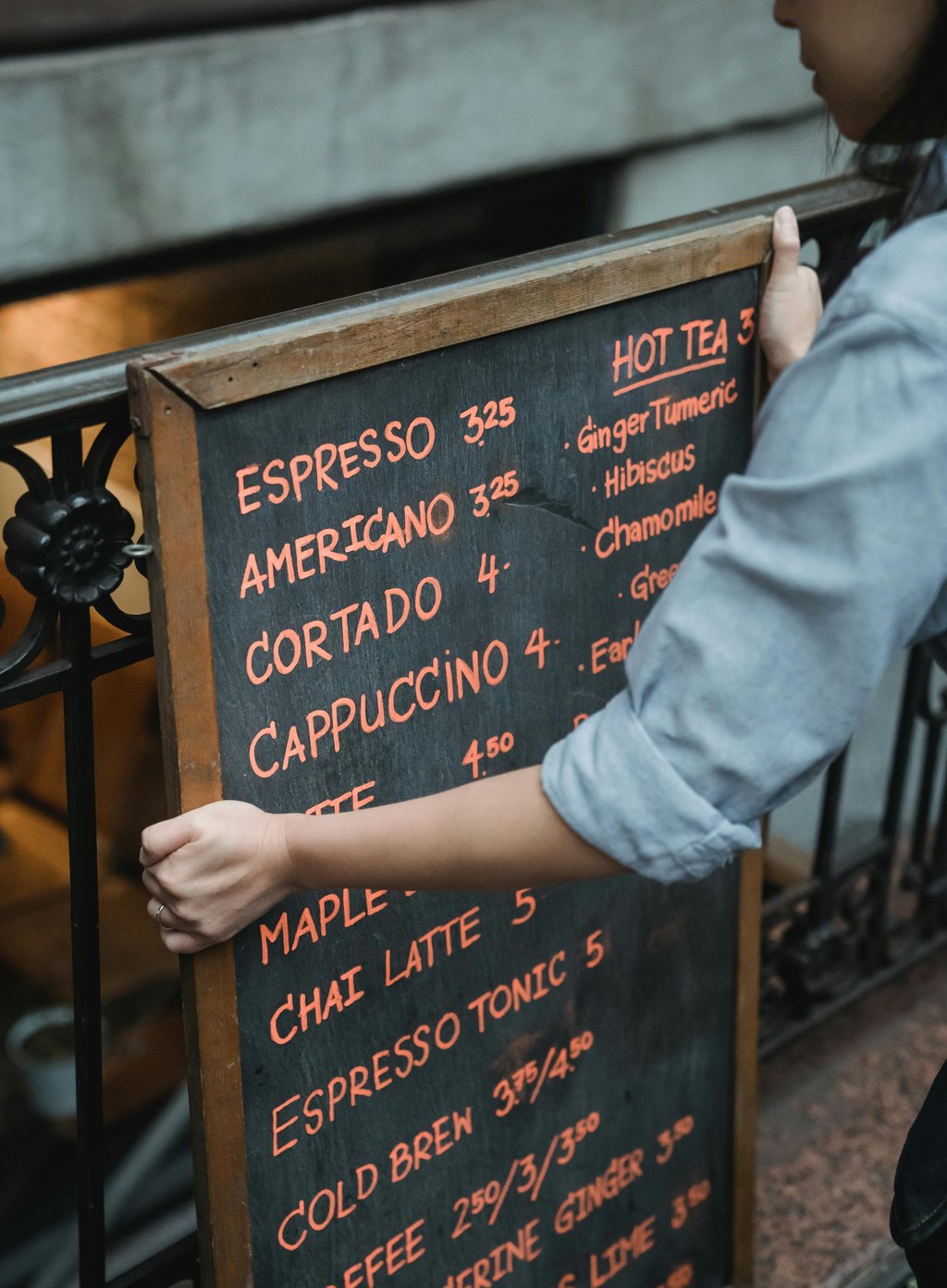
The Day Wendy's Tried to Charge You More for a Burger at Lunchtime
Target question:
What are the main pricing methods used in IB Business Management?
In February 2024 Wendy's CEO Kirk Tanner announced they were investing $20 million in digital menu boards. Everyone was happy, fancy screens showing off those juicy burgers. But minutes later, he announced they were planning to use "dynamic pricing" starting in 2025. Translation? Wendy's Dave Single might cost £7 at noon when you're starving, but only £4.50 at 3pm when nobody's there.
The internet wasn't happy at all.
Within hours, social media was ablaze with people comparing Wendy's to Uber surge pricing during a rainstorm. Memes everywhere. The result? Wendy had to backpedal faster than a cyclist going downhill with no brakes, insisting they'd never raise prices during busy times - no, no, they'd only lower them during quiet periods. Sure, Kirk.
Today we are dealing with pricing methods and we will explore why getting the price wrong can sink your business faster than Mike Tyson throw a punch.
Pricing Methods: IB Business Management Definitions
IB Business Management definition - Cost-plus pricing (mark-up pricing):
Sets price by adding a profit margin on top of the cost of production - simple to calculate, but it ignores competitor prices and demand.
IB Business Management definition - Penetration pricing:
Sets a deliberately low introductory price to break into a market and grab market share quickly, as a short-to-medium term strategy before prices rise.
IB Business Management definition - Loss-leader pricing:
Sells a specific product below cost to draw customers in, in the hope they buy other, more profitable items while they're there.
IB Business Management definition - Predatory pricing:
Deliberately prices below cost to force rivals out of a market before raising prices again - illegal in many countries, including across the EU.
IB Business Management definition - Premium pricing (prestige pricing):
Sets prices substantially above the market average to signal quality, luxury and exclusivity, working best when customers are not price-sensitive.
IB Business Management definition - Dynamic pricing (surge pricing):
Adjusts prices in real time based on demand levels, rising during busy periods and falling during quiet ones.
IB Business Management definition - Competitive pricing:
Sets prices based on what rivals charge, common in markets where customers can easily compare products.
IB Business Management definition - Contribution pricing:
Sets a price that exceeds variable cost per unit, so each sale contributes toward covering fixed costs until break-even is reached.
The key IB Business Management exam principle: context is everything - cost-plus suits a small bakery but would sink Disney+, premium pricing suits Hermès but is useless for Tesco, and even a technically sound strategy like Wendy's dynamic pricing can fail if it damages how customers feel about a brand.
The Basics: How Do Businesses Set Prices?
In IB Business Management, pricing methods are the various ways businesses determine what to charge for their goods and services. Managers consider loads of factors: production costs, competitor prices, market conditions and so on.
Let's start simple and work our way up to the more advanced (HL) material.
Cost-Plus Pricing: Maths You Can Actually Do
Cost-plus pricing (also called mark-up pricing) is basically the pricing method for people who liked GCSE maths. You take your costs, add a profit margin on top, and boom - that's your price.
The formula's dead simple: Price = Cost of production + Profit margin
IB Business Management Real-life Example:
Say you're running a small bakery. Each croissant costs you £0.80 to make (flour, butter, the tears of your overworked assistant). You want a 50% profit margin. So: £0.80 × 1.5 = £1.20 per croissant.
Done. Easy. Go home.
Advantages:
Simplest pricing method going
Straightforward to calculate (even at 6am before coffee)
Ensures you at least break even on each sale
Disadvantages:
Completely ignores what rivals are charging (which could be £0.90)
Doesn't focus on maximising demand
Assumes customers will pay whatever you decide
This is why you see cost-plus pricing mainly used by businesses with unique products, or industries where everyone charges roughly the same anyway.
Penetration Pricing: The "Free Sample" Strategy
IB Business Management Real-life Example:
Right, remember when Disney+ launched in 2019 at £6.99 a month - a lot cheaper than Netflix? That wasn't generosity. That was penetration pricing: setting your price low enough to break into an industry and steal market share from existing firms.
Disney knew Netflix was the big dog. So they undercut them massively. By 2024, Disney+ had raised prices to £15.99 for the ad-free plan, but by then they'd already got millions hooked on The Mandalorian series and couldn't leave.
Penetration pricing involves advertising a "special introductory price offer" to create brand awareness when launching a new product or entering a new market. It's a short-to-medium term strategy because eventually you need to actually, you know, make money.
Advantages:
Lets you enter a market and grab market share rapidly
Low prices discourage new competitors (who'd enter a market with razor-thin margins?)
Can force you to cut costs and improve efficiency just to survive
Creates word-of-mouth buzz ("Have you SEEN how cheap this is?!")
Disadvantages:
If costs suddenly spike, you're making losses
Customers might think "cheap price = rubbish quality"
People get used to low prices and throw a strop when you raise them
You might lose customers who care more about quality than savings
IB Business Management exam tip: Don't repeat yourself in IB papers. If asked for two advantages of penetration pricing, saying "to gain more customers" and "to increase market share" is basically the same point. Examiners won't give you further credit for that.
Loss Leaders: Deliberately Losing Money (But In a Smart Way)
Walk into any UK supermarket and you'll see this in action. Loss-leader pricing means selling something below cost to get customers through the door, where they'll hopefully buy loads of other, more profitable stuff.
Tesco might sell bread for £0.45 when it costs them £0.60 to stock. Why? Because you won't just buy bread. You'll grab milk, cheese, some Hobnobs, maybe a bottle of wine for later, and before you know it, you've spent £40.
It's a short-term tactic for specific products. Businesses usually limit how many loss leaders each customer can buy (otherwise someone would clear the shelves and sell them on eBay).
Advantages:
Builds customer loyalty (everyone loves a bargain)
Increased revenue from all the other stuff people buy
Great way to shift old stock nobody wants
Disadvantages:
Customers expect loss leaders constantly (expensive to maintain)
No guarantee they'll buy anything else
Requires lots of stock, which creates storage headaches
Predatory Pricing: The Illegal Option
Predatory pricing means deliberately charging stupidly low prices - even below cost - to harm rivals and restrict competition.
Imagine a massive supermarket chain sees a new competitor opening nearby. They could slash prices so low that the new guy can't possibly compete, forcing them out of business. Once the competitor's dead, prices go back up.
This is what causes price wars - when firms continually reduce prices to destroy each other. And right now, UK supermarkets are locked in one of the most vicious price wars in recent memory.
IB Business Management Real-life Example:
In 2025, Tesco, Asda, Sainsbury's, Aldi, and Lidl are involved in a constant price war. Tesco's using its Clubcard to offer lower prices to members (non-members feel robbed). Asda's launched "Just Essentials" with bright yellow packaging screaming "WE'RE CHEAP!" Sainsbury's has its "Aldi Price Match" on hundreds of items.
Meanwhile, Aldi and Lidl sit there with their permanent low prices, not needing loyalty schemes or gimmicks, just pure discount power. They now control nearly 20% of the UK grocery market.
The result? Tesco's forecast profit dropped by up to £400 million as they prepare for battle. That's how expensive price wars are.
Advantages of predatory pricing:
Low prices pull customers from rivals
If customers are price-sensitive, revenue increases
Acts as a barrier to entry for new firms
Disadvantages:
Illegal in many countries (the EU prohibits it)
Can spark quality concerns
Can trigger a full-blown price war where everyone loses
Unsustainable long-term
Premium Pricing: Expensive IS the Point
On the complete opposite end, we have premium pricing (or prestige pricing) - charging prices substantially above the market average to signal quality, luxury, and superiority.
IB Business Management Real-life Example:
Think Hermès. You can't just walk into a shop and buy a Birkin bag. You need a personal shopper, months of "relationship building" with the store, and then maybe they'll let you on the informal waitlist. Single Birkin bags have sold at auction for over $450,000. Not because they're 450 times better than a £1,000 handbag. Because exclusivity itself has value.
Premium pricing works when customers aren't price-sensitive - usually because of massive brand loyalty.
In 2024-2025, luxury brands hit a strange moment. After years of raising prices (Chanel, Louis Vuitton, Dior all hiked prices during the pandemic), customers started experiencing price fatigue. Luxury goods sales dropped for the first time in 15 years. Even rich people were going "Hang on, this is getting ridiculous."
Chanel's operating profit fell 30% in 2024. The brand that usually raises prices twice a year? Didn't in 2025. That's how you know things are rough.
But brands like Porsche still thrive. With a price acceptance score of 9.3 out of 10, customers are happy to pay premium prices because they trust the quality and status it brings.
Advantages:
Higher profit margins
Premium prices increase brand value
Products become status symbols (free marketing from customers showing off)
Disadvantages:
Limited customer base (not everyone can afford a Rolex)
High R&D costs to justify premium quality
High marketing costs to maintain the prestige image
Doesn't work for most products in competitive markets
Dynamic Pricing
Remember Wendy's? Let's cover dynamic pricing (HL topic), also called surge pricing.
Dynamic pricing adjusts prices based on different time periods to reflect changes in demand levels. When demand surges, prices go up. When it's quiet, prices drop.
You've experienced this quite a few times without noticing:
Uber charges more at 5pm on a Friday (everyone leaving work)
Airlines charge more for school holiday flights
Theme parks (Disney, Universal Studios) charge more in summer than winter
In 2025, this is becoming everywhere. Walmart's rolling out electronic shelf labels in 2,300 US stores - prices can change in minutes based on demand, inventory, and competitor prices. Kroger, Whole Foods, Lidl are all doing it.
FIFA announced they'll use dynamic pricing for the 2026 World Cup tickets. Expect to pay an absolute fortune for the final.
Dynamic pricing relies on sophisticated algorithms, big data, and management information systems to track demand in real-time and adjust accordingly.
Advantages:
Peak period prices = higher profit margins
Off-peak discounts help maximise capacity usage
Helps with stock control (discount overstocked items)
Disadvantages:
Customer dissatisfaction (nobody likes paying more than someone else for the same thing)
Reduces brand loyalty (people hunt for better deals elsewhere)
Time-consuming to monitor market conditions constantly
The Wendy's disaster shows why this backfires: 64% of diners said they'd have a negative reaction to restaurants using surge/dynamic pricing, and 81% would either stop going or change when they eat to avoid higher prices. That's catastrophic for a fast-food chain.
As one senator put it: "Charging grandma $10 for a burger at noon but $6 at 3pm feels like price gouging, not innovation."
Competitive Pricing: Just Match the Other Guys (HL)
Competitive pricing is wonderfully simple: set your prices based on what rivals charge.
This is massive in supermarkets. Tesco literally has people checking Aldi's prices weekly. If they drift too far above, they lose credibility and customers bolt.
It's common in markets where customers can easily compare products - like groceries, petrol, or online shopping (price comparison websites have made this even easier).
Advantages:
Keeps you competitively priced and protects market share
Low-risk strategy for new businesses
Disadvantages:
Can spark price wars (if one drops, everyone drops, profit margins disappear)
Price isn't the only competitive factor - quality and branding matter too
Contribution Pricing: The Break-Even Obsessed Method (HL)
Finally, contribution pricing (HL) sets prices that exceed variable costs per unit, so each sale contributes toward fixed costs. Once fixed costs are covered, you're in profit.
IB Business Management Real-life Example: Say a restaurant has:
Average meal price: £25
Average variable cost per meal: £13
Total fixed costs: £6,000/month
Unit contribution = £25 - £13 = £12
Break-even output = £6,000 ÷ £12 = 500 meals per month
If they want to break even faster, raise the price to £28: Break-even = £6,000 ÷ (£28 - £13) = 400 meals per month
Advantages:
Helps you know exactly how many units you need to sell
Flexible - uses existing cost data
Useful for one-off special orders or contracts
Disadvantages:
Contribution ≠ profit (higher prices don't guarantee customers will buy)
Allocating fixed costs between products can be subjective
Might lead to uncompetitive pricing
IB Business Management - Syllabus and Programme Full Guide →
Practise This Topic: The IB Business Management Activity Book
Pricing questions often combine theory with calculation, especially contribution pricing and break-even output, so this is one of the more numerical parts of the Marketing module. The Activity Book's Unit 4.5 Price gives you worked examples and case studies to practise matching the right method to the right context.
The IB Trainer's IB Business Management Activity Book covers:
✓ All 6 IB Business Management modules (5 Modules + the Complete IB Business Management Toolkit broken down unit-by-unit
✓ 2-6 case studies per unit (some units need more practice than others)
✓ Every IB Business Management Assessment Objective (AO) explicitly addressed
✓ All 15 IB Business Management Toolkit tools with worked examples
✓ IB Business Exam Socially responsible companies (business as force for good)
✓ Platform access with supporting video content
IB Business Management Exam Corner
In 2025, pricing is more complex and controversial than ever. Walmart's experimenting with electronic price tags that could change while you're shopping. UK supermarkets are burning through hundreds of millions in profit fighting price wars. Luxury brands are desperately trying to justify why a handbag costs more than a used car.
The lesson for your IB Business Management exam? Context is everything. Cost-plus works brilliantly for a small bakery but would be disaster for Disney+. Premium pricing is perfect for Hermès but useless for Tesco. Penetration pricing got Disney+ millions of subscribers but nearly bankrupted smaller streaming services trying the same trick.
And dynamic pricing? Well, Wendy's learned the hard way that there's a massive difference between "innovative pricing strategy" and "making people feel ripped off."
Price is a signal about quality, value, and what you stand for as a brand. Get it right, and you dominate your market. Get it wrong, and the internet will roast you harder than those burgers you're trying to sell.
Stay well,
Frequently Asked Questions: Pricing Methods In IB Business Management
What is cost-plus pricing and how is it calculated?
Cost-plus pricing (mark-up pricing) sets the price by adding a chosen profit margin on top of the cost of production, using the formula Price = Cost of production + Profit margin. For example, a bakery with a croissant costing £0.80 to make and wanting a 50% margin would price it at £1.20 (£0.80 × 1.5). It's simple to calculate and guarantees a profit on each sale, but it completely ignores competitor prices and customer demand.
What is the difference between penetration pricing and predatory pricing?
Penetration pricing is a legal, short-to-medium term strategy of launching at a deliberately low price to break into a market and build market share, as Disney+ did against Netflix in 2019. Predatory pricing goes further, deliberately pricing below cost specifically to force existing rivals out of business before raising prices again once they're gone - and it's illegal in many countries, including across the EU. The key distinction is intent and legality: penetration pricing aims to win customers, predatory pricing aims to destroy competitors.
What is dynamic pricing and why did Wendy's plan backfire?
Dynamic pricing (surge pricing) adjusts prices in real time based on demand, rising during busy periods and falling during quiet ones, the way Uber and airlines already do. Wendy's 2024 plan to bring this to burger pricing backfired because customers reacted to it as price gouging rather than smart innovation - 64% of diners said they'd react negatively to surge-priced restaurants, and 81% said they'd change their behaviour to avoid it. It's a clear reminder that a technically sound pricing method can still fail if it damages how customers feel about a brand.
How does contribution pricing work?
Contribution pricing sets a price that exceeds the variable cost per unit, so each sale contributes toward covering fixed costs, and break-even output is calculated as fixed costs ÷ contribution per unit. For a restaurant charging £25 a meal with £13 variable cost and £6,000 monthly fixed costs, the contribution is £12 per meal, meaning it needs to sell 500 meals a month to break even. Raising the price to £28 would lower that break-even point to 400 meals, though a higher price isn't guaranteed to still attract the same number of customers.
What is premium pricing and when does it work?
Premium pricing (prestige pricing) sets prices well above the market average to signal quality, luxury and exclusivity, as Hermès does with Birkin bags that have sold at auction for over $450,000. It only works when customers are not price-sensitive, usually because of very strong brand loyalty and trust, as Porsche demonstrates with a 9.3 out of 10 price acceptance score. Even premium pricing has limits though - Chanel's operating profit fell 30% in 2024 as luxury shoppers began showing signs of price fatigue after years of repeated price rises.
Related Content:
Continue Learning: IB Business Management Blog
IB Business Branding - worth reading alongside this entry, since strong brand loyalty is exactly what allows a business to use premium pricing successfully.
IB Business Price Elasticity Demand - the natural next step, explaining why some products (like Hermès bags) can absorb high prices while others (like Wendy's burgers) cannot.
IB Business Management Toolkit - market research sits within the 15 Toolkit tools, so this is where students can see it applied alongside other quantitative and qualitative techniques.
IB Business Management Marketing - this is the 8th entry of the Marketing module, so this hub is the best next stop for an overview of everything else Module 4 covers.
IB Business Management - for the full course overview, syllabus breakdown and links into every other module.
Take Your Revision Further
Once you can match a pricing method to a business context and confidently run a contribution/break-even calculation, the next step is practising that judgement on full exam-style questions. The IB Business Management Activity Book gives you exam-standard calculations, model answers and marking schemes across every module - including the Marketing chapter this topic belongs to.
Explore the IB Business Management Activity Book here.
© Theibtrainer.com 2012-2026. All rights reserved.
Legal
Have a Tip? Send us a tip using our anonymous form