IB Business Operations Methods Explained
From Rolls-Royce's £900k bespoke cars to iPhone's 500k daily output-discover which operations methods fit your business. For IB Business students.
IB BUSINESS AND MANAGEMENTIB BUSINESS MANAGEMENT MODULE 5 OPERATIONS MANAGEMENT
Lawrence Robert
1/26/202612 min read
Half a Million iPhones a Day: How Operations Methods Work
Target question:
What are the four main operations methods in IB Business Management?
Let's imagine for a second that you're obscenely wealthy. You walk into a Rolls-Royce showroom and say, "I want a car, but I want the dashboard to feature a miniature golden river carved into dark wood, hand-painted with actual 24-carat gold. And I want the headliner to show the exact constellation pattern from the night my daughter was born. Oh, and make the exterior match my Labrador's fur colour."
The Rolls-Royce team doesn't bat an eyelid. They say, "No problem, give us a few months and 40,000 hours of craftsmanship." You happily shake hands and leave the dealer.
Now imagine you're broke (like most of us), walk into an Apple store, and say, "I want an iPhone, but I want it in neon pink with my face engraved on the back and the internals arranged to spell my name."
The Apple employee laughs at you. "Mate, we make 500,000 of these a day in Foxconn's factory. You get what everyone else gets."
This is what operations methods is about and where how you make something is just as important as what you're making.
Operations Methods: IB Business Management Definitions
IB Business Management definition - Job production:
Creates a completely unique, one-off product tailored to a single customer's exact specifications, as with Rolls-Royce's bespoke cars - maximum flexibility and quality, but slow and expensive per unit.
IB Business Management definition - Batch production:
Makes identical products in distinct groups or batches, switching between different runs to offer some customer choice, as with Nike's seasonal trainer colourway drops.
IB Business Management definition - Mass (flow) production:
Is continuous, standardised production of identical products at huge scale and low unit cost, as with Foxconn's 500,000-iPhones-a-day factory - efficient, but completely inflexible.
IB Business Management definition - Mass customisation:
Combines the low costs and scale of mass production with a layer of personalisation, as with Coca-Cola's "Share a Coke" campaign - premium pricing on what is still essentially a mass-produced base product.
The key IB Business Management exam principle: the right operations method depends on the product itself, what the target market wants (choice vs low cost), the business's available capital, the scale it operates at, and its labour requirements - and most real products, like a Ferrari, actually combine several methods across different components.
The Four Horsemen of Production
There are four main ways to make stuff: job production, batch production, mass (flow) production, and mass customisation. Each one exists because different products need different approaches. You wouldn't make wedding cakes the same way you make canned beans, would you?
Let's break them down with some proper IB Business Management Real-life Examples:
Job Production: When Money Or Time Are Not Relevant
Job production is all about creating something completely unique for one specific customer. It's bespoke, it's custom, it's one-of-a-kind. Each order is basically a snowflake - special and never to be repeated.
IB Business Management Real-life Example: The Rolls-Royce Reality
In 2025, Rolls-Royce delivered 5,664 cars. Not one of them was the same. Every single vehicle was a unique creation, hand-built to the owner's exact specifications.
The Phantom Centenary Private Collection? Only 25 were made, and they took over 40,000 hours of combined craftsmanship. That's nearly five years of work if one person did it non-stop. These cars feature layered ink marquetry with 24-carat gold leaf, a solid gold Spirit of Ecstasy mascot, and interior galleries engraved with a century of press quotations.
One customer commissioned a Rolls-Royce to match their pet Labrador. Another wanted a tribute to a late uncle. Yet another requested Chinese mural art inspired by ancient Dunhuang artwork, with hand-painted leather galleries.
Rolls-Royce is currently expanding their Goodwood factory - not to make more cars, but to allow more time per car. They're investing over £300 million (that's $380 million for the Americans) specifically to handle increasingly complex bespoke commissions. Some customers in the US are now paying over $1 million per car - roughly twice the base price of a Phantom - just for customisation work.
The cars take months to build. Each one requires highly skilled craftspeople - specialists in marquetry, leather work, metal fabrication, painting, and more. These aren't the usual assembly line workers; they're artisans.
The Job Production Formula
Advantages:
Ultimate flexibility - You want a golden river carved into your dashboard? Done.
Outstanding quality - Every detail is perfected because it matters to that customer.
Premium prices - People pay silly money for exclusivity. Rolls-Royce customers don't even ask about the price.
Motivated workers - Skilled craftspeople love the variety and challenge.
Disadvantages:
Eye-watering labour costs - Highly skilled workers don't come cheap.
No economies of scale - You're making one thing at a time, so costs per unit are massive.
Painfully slow - 40,000 hours for 25 cars. Do the maths.
Other examples of job production:
Bespoke wedding dresses
Special occasion cakes (your nan's 80th birthday cake with her face on it)
Portrait painters
Bridges (the Golden Gate Bridge is a one-off, right?)
Hollywood films (each one's unique, even if they all feel the same lately)
Private tuition
Batch Production
Batch production is the middle ground. You're making identical products in sets (batches), but you're not running a never-ending production line. You make 100 red t-shirts, then switch to 65 blue ones, then back to 50 green ones.
IB Business Management Real-life Example: Nike's Batch Strategy
Nike as far as I know gets batch production spot on. Check their release schedule for 2026 - they're dropping trainers in carefully planned batches with different colourways, different sizes, and different designs.
The Nike Ja 3 "Chinese New Year" releases in January 2026. They'll make thousands in batch runs - men's sizes, kids' sizes, different colourways. Once that batch is done, they clean the machinery and move on to the Nike Dunk Low "Dress Shoe Pack" in olive and black.
They're not making one pair at a time like Rolls-Royce cars, but they're also not churning out identical trainers 24/7 like a mass production factory. They're making batches to meet specific demand, testing which designs sell, and adjusting accordingly.
Their new Nike Mind 001 and Mind 002 trainers (releasing January 2026) use "neuroscience-based footwear" with 22 independent foam nodes that activate sensory regions of your brain. Extraordinary stuff. But even these high-tech trainers are made in batches - different colours, different sizes, produced in runs rather than continuously.
The Batch Production Formula
Advantages:
Lower costs than job production - You get some economies of scale by making multiple identical items.
Some flexibility - Customers get choice from different batches (red trainers or blue trainers?).
Good for smaller businesses - You don't need massive continuous production lines.
Disadvantages:
Less flexibility than job production - Customers choose from your options, not their own specifications.
Need for stock - Raw materials for multiple batches pile up.
Downtime - Between batches, you're cleaning machinery, changing settings, basically earning nothing.
Other examples of batch production:
Greggs baking different batches of pasties throughout the day
Casual clothing brands
Cookies and bread
Shoes
Furniture
Mass (Flow) Production: Quantity Beating Quality Every Time
Mass production (also called flow production) is all about volume. Continuous, automated, capital-intensive production that never stops. You're making thousands or millions of identical products as cheaply and quickly as possible.
IB Business Management Real-life Examples: The iPhone Factory That Never Sleeps
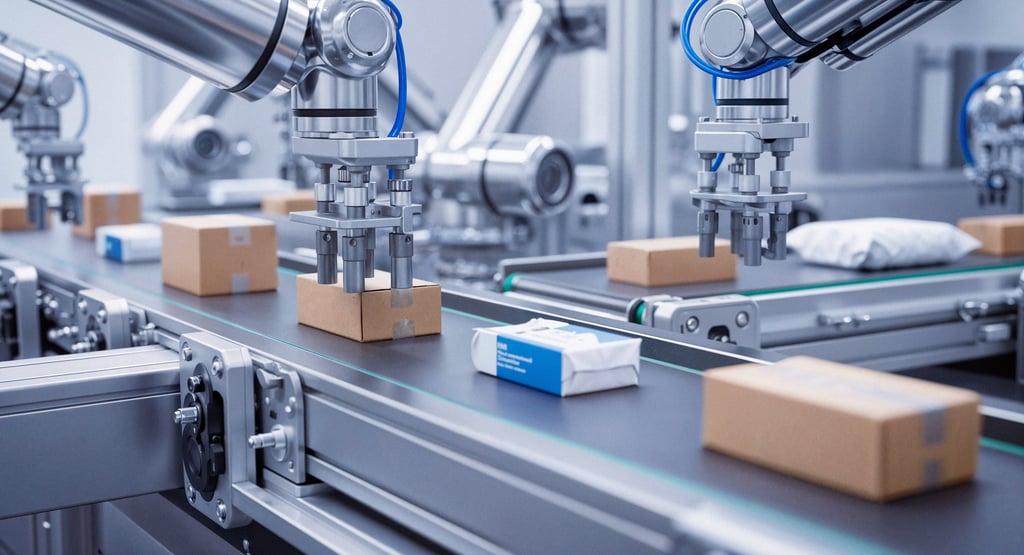
Foxconn's "iPhone City" in Zhengzhou, China is genuinely terrifying in scale. It employs 300,000 workers and can produce 500,000 iPhones per day. That's over 20,000 phones every single hour. One every 0.18 seconds.
The production line never stops. It's absolute automation. Workers are semi-skilled or specialised in one tiny part of the process - you might spend your entire shift just putting in batteries, while someone else only installs cameras, and someone else only tests screens.
Currently, China still assembles about 80% of global iPhones, though Apple's massively shifting production to India. By the end of 2026, Apple plans to assemble all US-bound iPhones in India, requiring them to double Indian production capacity. They're building a $2.6 billion Foxconn plant in Bengaluru opening in 2026.
Between January and May 2025, iPhone exports from India hit $9.35 billion - more than triple the previous year. They're on track to produce 25% of all iPhones in India by end of 2025, rising to 35% by 2026.
This is mass production at its best. Standardised output. Identical products. Low prices (relatively speaking - iPhones still cost a fortune). Massive scale.
The Mass Production Formula
Advantages:
Lowest unit costs - Economies of scale mean each iPhone costs Apple a lot less to make than what they charge.
Capital intensive = longer production - Machines can run 24/7 (unlike humans).
Less labour needed - Automation replaces humans for many tasks.
Easy to hire workers - Semi-skilled labour is easier to find and train.
Easy to scale up - Need to make more? Just run the machines longer.
Disadvantages:
Lower profit margins - You're competing on price, so margins get squeezed.
Zero flexibility - Everyone gets the same iPhone. Don't like it? Tough.
Requires epic stock control - 500,000 iPhones a day means you need warehouse space the size of Wales.
Insane start-up costs - Building a factory that produces 500,000 units daily costs billions.
Interdependence nightmare - If one part of the production line fails, the whole thing stops.
Soul-crushing for workers - Doing the same task 10,000 times a day cannot be good for your health.
Other examples of mass production:
Bottled water (billions of identical bottles)
Canned drinks
Motor vehicles (Tesla, Ford, Toyota - all mass produced)
Televisions
Light bulbs
Ball bearings
Toys
IB Business Management - Syllabus and Programme Full Guide →
What Happens In Real Life?
Most products actually use multiple operations methods.
IB Business Management Real-life Examples:
Ferrari engines? Hand-made using job production by master craftsmen. Ferrari leather? Bought in batches of different colours and textures. Ferrari tyres? Mass produced by Michelin and Pirelli.
So even a luxury sports car combines all three methods depending on which component you're talking about.
Mass Customisation: The Best Of The Best
Mass customisation - combining the benefits of mass production (low costs, big scale) with job production (personalisation, uniqueness). It's the best of both worlds, if you can make it work.
IB Business Management Real-life Examples: Coca-Cola's "Share a Coke" Comeback
Coca-Cola was very successful with this back in 2011 with their "Share a Coke" campaign, where they swapped the logo for popular first names on bottles and cans. And guess what? It's back for 2025, especially for Gen Z.
Starting April 2025, you can walk into shops and find Coke bottles with names already on them. But they've also included QR codes on the packaging that take you to the "Share a Coke digital hub."
There, you can customise bottles with any name you want. You can order personalised 8oz glass bottles or 12oz cans. You can even bulk order 100+ bottles with different names if you're throwing a massive party (or you're just really into personalised Coke).
The base product? Mass produced. Billions of identical bottles rolling off production lines globally. But the customisation layer? That's job production thinking applied to mass production infrastructure. They're printing different names on bottles that come from the same production line.
This allows Coca-Cola to charge a premium price for this. A personalised bottle costs more than a regular one, but not that much more because they're still mass producing the actual drink. They're earning higher profit margins on what's essentially the same product with a name slapped on it.
And it works. People love finding their names on Coke bottles. It's become a social media thing. "Share a Coke Memory Maker" lets you create personalised videos with your own content and memes - turning everyday moments into shareable memories. They're even partnering with McDonald's for "Share a Meal" bundles.
The Mass Customisation Formula
Advantages:
Premium pricing - People pay more for personalised products, boosting profit margins.
Differentiation - Your product stands out from competitors. It's got a Unique Selling Point (USP).
Flexibility - You can adapt to meet varying customer needs without ditching mass production efficiencies.
Disadvantages:
High set-up costs - You still need all the machinery for mass production, plus customisation technology.
Higher production costs than traditional mass production - Customisation adds expense.
Other examples of mass customisation:
NikeiD (design your own trainers online)
Dell computers (choose your specs)
Build-Your-Own burger chains
Personalised M&Ms
Custom t-shirt printing services
IKEA kitchen configurators
Practise This Topic: The IB Business Management Activity Book
Operations methods questions reward students who can justify the right method for a specific product rather than just describing all four in general terms. The Activity Book's Unit 5.2 Operations Methods gives you case studies to practise exactly that kind of applied comparison.
The IB Trainer's IB Business Management Activity Book covers:
✓ All 6 IB Business Management modules (5 Modules + the Complete IB Business Management Toolkit broken down unit-by-unit
✓ 2-6 case studies per unit (some units need more practice than others)
✓ Every IB Business Management Assessment Objective (AO) explicitly addressed
✓ All 15 IB Business Management Toolkit tools with worked examples
✓ IB Business Exam Socially responsible companies (business as force for good)
✓ Platform access with supporting video content
So Which Method Should a Business Use?
It really depends on what you're selling and who's buying.
Making bespoke wedding dresses? Job production is your only option. You can't batch produce wedding dresses because every bride wants something different.
Making trainers for teenagers who want choice but can't afford £900 custom shoes? Batch production works perfectly. Nike makes different batches, tests what sells, adjusts quickly.
Making bottled water for mass market consumption? Mass production all day long. Nobody cares if their bottle is unique - they just want it cheap and available everywhere.
Want to stand out in a crowded market? Mass customisation might be your answer. Give customers the illusion of uniqueness while keeping your costs manageable through mass production of base products.
The exam questions on this topic love asking you to compare operations methods for a particular product. When you're answering, think about:
The product itself - Is it standardised or unique?
The target market - Do customers want choice or just want it cheap?
The costs - Can the business afford massive capital investment?
The scale - Are they selling hundreds or millions?
Labour requirements - Do they need highly skilled craftspeople or semi-skilled workers?
IB Business Management Gold
Operations methods are fundamental business decisions that in many ways, determine whether your company succeeds or fails.
Rolls-Royce couldn't survive using mass production. Their customers would revolt. Apple couldn't survive using job production. They'd make about 12 phones a year and go bankrupt.
Choose the wrong operations method and you're dead meat. Choose the right one, and you might just build an empire - whether that's 5,664 bespoke luxury cars or 500,000 identical smartphones rolling off the production line every single day.
Key Takeaways and Examples for your IB Business Management Exam:
Job production creates unique, customised products for individual customers (Rolls-Royce bespoke cars)
Batch production makes identical items in sets, offering some choice and flexibility (Nike trainers)
Mass production creates standardised products at massive scale with low unit costs (iPhones)
Mass customisation combines mass production efficiency with personalisation (Coca-Cola Share a Coke)
Most products use multiple operations methods for different components
The right method depends on your product, market, costs, and scale
Stay well,
Frequently Asked Questions: Operations Methods In IB Business Management
What are the four main operations methods in IB Business Management?
The four methods are job production (unique, one-off products like Rolls-Royce's bespoke cars), batch production (identical products made in distinct sets, like Nike's seasonal trainer drops), mass or flow production (continuous, standardised output at huge scale, like Foxconn's 500,000-iPhones-a-day factory), and mass customisation (a personalisation layer added to a mass-produced base, like Coca-Cola's "Share a Coke"). Most real businesses use more than one method depending on the product and its components.
What is the difference between job production and batch production?
Job production creates a single, completely unique product tailored to one customer's specifications, offering ultimate flexibility and quality but at high cost and slow speed - Rolls-Royce's Phantom Centenary Collection took over 40,000 hours of craftsmanship for just 25 cars. Batch production makes identical products in distinct groups, switching between runs to give customers some choice while still achieving partial economies of scale, as Nike does with different trainer colourways. The key distinction is that job production is one customer, one product, while batch production is many identical products made in planned groups.
What are the advantages and disadvantages of mass production?
Mass production achieves the lowest unit costs through economies of scale and can run continuously with less labour, as shown by Foxconn producing an iPhone roughly every 0.18 seconds. Its disadvantages include zero flexibility for customers, massive upfront start-up costs, complex stock control needs, and a serious interdependence risk - if one part of the production line fails, the entire process can stop. It also tends to squeeze profit margins since businesses using it typically compete on price rather than exclusivity.
What is mass customisation and how does Coca-Cola use it?
Mass customisation combines the low costs and scale of mass production with an added layer of personalisation, letting a business charge premium prices without abandoning production efficiency. Coca-Cola's revived "Share a Coke" campaign demonstrates this well: the drink itself is still mass produced on standard bottling lines, but customers can personalise bottles with names via QR codes linking to a digital customisation hub. The result is higher profit margins on what is fundamentally the same mass-produced product, just with a name printed on the label.
How does a business choose which operations method to use?
The choice depends on whether the product is standardised or unique, whether the target market wants choice or low cost, how much capital the business can invest upfront, the scale it's operating at, and whether it needs highly skilled craftspeople or semi-skilled labour. A bespoke wedding dress has no alternative to job production, while bottled water for mass consumption makes no sense without mass production. Even within a single product, like a Ferrari, different components (hand-built engines, batched leather, mass-produced tyres) can use entirely different methods.
Related Content:
Continue Learning: IB Business Management Blog
IB Business The Role of Operations Management - read this one first if you haven't already, since it sets out the inputs-outputs framework that job, batch, mass and mass customisation production all operate within.
IB Business Lean Production & Quality Management - the natural next step, covering how businesses improve the efficiency and quality of whichever operations method they've chosen.
IB Business Management Operations Management - your complete hub for all Module 5 topics
IB Business Management Toolkit - operations methods connect to several of the 15 Toolkit tools, so this is where students can see them applied alongside other strategic models.
IB Business Management - your complete IB Business Management resource
Take Your Revision Further
Once you can justify the right operations method for a specific product and market, the next step is practising that judgement on full exam-style case studies. The IB Business Management Activity Book gives you exam-standard questions, model answers and marking schemes across every module - including the Operations Management chapter this topic belongs to.
Explore the IB Business Management Activity Book here.
© Theibtrainer.com 2012-2026. All rights reserved.
Legal
Have a Tip? Send us a tip using our anonymous form