IB Business People, Processes & Physical Evidence
Discover how People, Processes & Physical Evidence transform services. Real examples from Starbucks, Greggs, Amazon + exam tips for IB Business students.
IB BUSINESS MANAGEMENTIB BUSINESS MANAGEMENT MODULE 4 MARKETING
Lawrence Robert
1/20/202611 min read
Why Your Favourite Coffee Shop Isn't Just About the Coffee
Target question:
What are the three extra Ps added to the marketing mix for services, and why?
One morning, like many other mornings, you walk into a Starbucks, desperate for your morning caffeine fix before that lethal 9am Economics mock exam. The barista's having a proper bad day - she's clearly stressed, and snaps at you when you ask about dairy-free options, and then hands you a scorching hot cup without a sleeve. You leave thinking "not going there again", even though the coffee itself was quite decent. Now imagine the opposite: you're greeted with a smile and by your first name, the staff remember you like oat milk, there's comfy seating by the window, and you're in and out in four minutes flat. Same good coffee, but completely different experience, right?
This, is where the extended marketing mix comes in - specifically the three extra Ps that Bernard H. Booms and Mary J. Bitner added back in 1981 when they realised that marketing services needs a completely different playbook than just marketing physical products.
When you buy a PlayStation, it doesn't matter whether the shop assistant is lovely or having the worst day of their life. All you care about is getting your Play. But when you're buying a service - like getting your hair done, eating at Nando's, or staying at a hotel - the person delivering that service IS the product and you can't separate the two. And that's why we need these three additional Ps: People, Processes, and Physical Evidence.
People, Processes & Physical Evidence: IB Business Management Definitions
The extended marketing mix adds three service-specific Ps - People, Processes and Physical Evidence - to the traditional four Ps, a framework developed by Booms and Bitner in 1981 to reflect that services can't be marketed the same way as physical products.
IB Business Management definition - People:
Refers to the employees delivering a service, who in a service business effectively become the product itself in the customer's eyes, since the quality of the interaction is inseparable from the service.
IB Business Management definition - Processes:
Refers to the operational systems - queuing, payment methods, bookings, after-sales care - that determine how consistently and smoothly a service is actually delivered.
IB Business Management definition - Physical evidence:
Refers to the tangible cues - interior design, uniforms, menus, ambience - that let customers judge the quality of a service before, or while, they experience it.
The key IB Business Management exam principle: the marketing mix must be integrated - all seven Ps need to reinforce each other, and the right mix depends on context (business size, market size, product type, PLC stage, good vs service, and consumer profile) rather than a single "correct" formula.
P Number 5: People
People in service businesses in short: your employees aren't just making your product - they literally are your product, at least in the customer's eyes. Did you ever have a waiter who made you feel like you were personally ruining their evening by existing? It completely kills the atmosphere of even the fanciest restaurant. On the contrary, brilliant staff can make a mediocre meal (product) feel like a "best" experience.
This is why smart businesses invest heavily in training their people. Take McDonald's - they've got their own university in Illinois (seriously, it's called Hamburger University, and no, I'm not making that up) where they train staff in customer service and restaurant management to make sure every single branch delivers the same experience whether you're in Manchester or Mumbai.
Here in the UK, Greggs has taken a different approach with their "Fresh Start" programme. They're actively recruiting ex-military personnel, people who've been long-term unemployed, and even ex-offenders, giving them proper training and a genuine shot at a career. It's not just good corporate social responsibility - it's smart business because people who are given a proper chance often feel grateful and bring serious passion and energy to their work.
The whole "people" element has become even more crucial since social media exploded. Remember that one viral TikTok where someone had a bad experience and it got millions of views? Yes, bad customer service spreads faster than gossip in school corridors now. According to recent customer service research, 67% of UK shoppers now expect a response to their complaints within two hours. Two hours! That's considerable pressure to perform on customer service teams.
But, employee-customer relationships vary massively depending on culture. In Japan, shop assistants bow when you leave. In the US, servers introduce themselves by name and are super chatty. In parts of Europe, that would seem fake and over-the-top. The point is, businesses need to train their people to deliver service that matches what customers in that specific culture expect. What works in a London Starbucks might feel totally wrong in a Tokyo one.
IB Business Management - Syllabus and Programme Full Guide →
P Number 6: Processes
Processes stop everything from descending into complete chaos. Process refers to all the operational stuff - queuing systems, payment methods, how bookings work, after-sales care, literally everything that makes the service actually happen.
IB Business Management Real-life Examples:
Let's talk queuing because everyone hates waiting in line (except maybe for Glastonbury tickets, but that's different). McDonald's pledged to serve you within 90 seconds at the counter or 3.5 minutes at the drive-thru. That's not you having your annual lucky day - that's process. They've worked out exactly how to sequence orders, manage the kitchen, and keep things flowing.
Starbucks recently rolled out a smart queuing algorithm that gets 80% of their cafes serving customers in four minutes or less. During the 2024 Boxing Day sales, UK retailers with properly integrated customer service systems saw 40% fewer complaints about communication gaps compared to shops using different disconnected systems. That's process working properly.
And then there's Amazon's Just Walk Out technology, this is what we call sci-fi progress. It's now in over 30 college campuses and tons of stadiums in the US. You literally walk in, grab what you want, and walk out. Cameras and sensors track what you've taken, and you get charged automatically. No queues, no tills, no "excuse me, is this lane open?" It's like shoplifting but legal. The technology uses AI to figure out "who took what," and whilst it didn't quite work in big Amazon Fresh grocery stores (they switched to smart shopping trolleys instead), it's highly successful in smaller format stores where people just want to grab convenient stuff quickly.
Processes also include payment systems. Ever been somewhere that still only takes cash? An absolute headache. Modern processes need to accommodate how people actually want to pay - contactless, Apple Pay, online transfers, buy-now-pay-later schemes. Amazon One even lets you pay using just your palm (scanning the veins under your skin, which is both cool and slightly creepy). Over 8 million people have used it, so clearly the convenience outweighs the lack of privacy for most.
What's important about processes is consistency. Every single customer should get greeted when they walk into a restaurant. Every customer should be able to pay however they want. But processes also need to be flexible enough to accommodate individual preferences - like if you're allergic to something or need wheelchair access. It's finding that balance between "everyone gets the same reliable service" and "we can still customise things for you if you need them."
P Number 7: Physical Evidence
Physical evidence is basically all the tangible stuff that helps customers judge what your service is like before they've even tried it. It's the Instagram-worthy interior, the menus, the staff uniforms, the certificates on the wall, even how the place smells.
When you walk past a bank, you want it to look secure and professional, not like someone's dodgy garage. Hotels need to look clean (like, visibly clean, not just actually clean). Family restaurants should feel welcoming like a home and not intimidatingly posh. A health spa should have that calm, zen atmosphere with the trickling water sounds and the smell of lavender or whatever.
IB Business Management Real-life Examples:
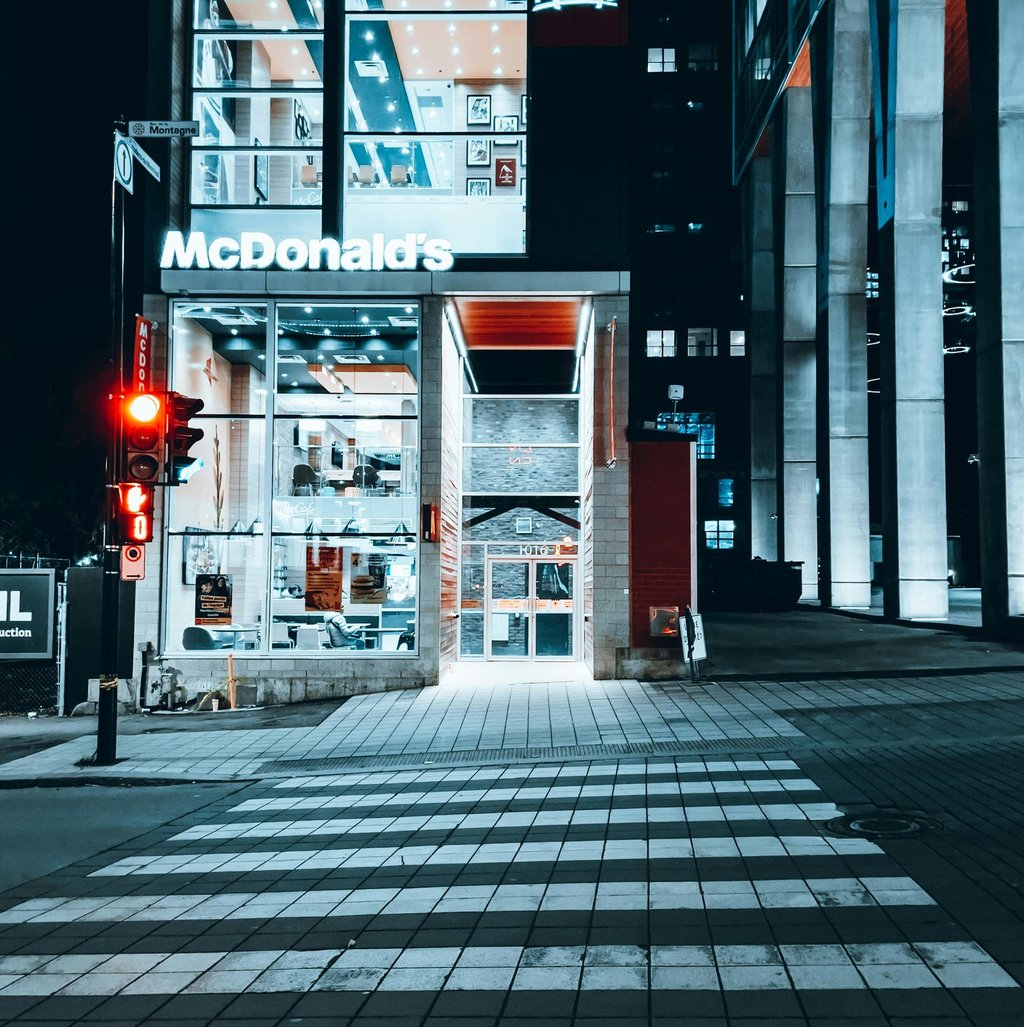
McDonald's nails this. Every single one of their restaurants worldwide is designed to feel family-friendly. The menus look the same everywhere. Staff wear the same uniforms. It's deliberate - they want you to feel familiar and comfortable whether you're in Brighton or Beijing.
Starbucks is currently having a massive rethink about physical evidence. Under their new CEO Brian Niccol (who previously turned around Chipotle Mexican Grill), they're renovating 1,000 stores by the end of 2026 with a "Back to Starbucks" strategy. They're bringing back comfy seating (they'd removed 30,000 comfortable seats in recent years), adding softer lighting to reduce glare, incorporating local design elements, and creating stores that actually reflect their neighbourhoods. One store in East Hampton has a compass on the wall because of the local maritime history. They're also implementing their Inclusive Spaces Framework with features like power-operated doors, optimised acoustics for people with hearing aids, and lower counters for wheelchair access.
The transformation is working. Early results show customers staying longer, visiting more often, and giving positive feedback. Because physical evidence doesn't just affect customers - it affects employees too. Would you rather work in a dingy, depressing environment or somewhere that's actually pleasant? Employee motivation is directly linked to the physical space, which then circles back to the "People" P because motivated employees provide better service.
Greggs is also experimenting with physical evidence, opening their first "Bitesize Greggs" stores - smaller format shops in high-footfall locations like train platforms where space is limited. It's the same Greggs atmosphere, just compressed into a tiny footprint.
Getting the Mix Right: It's All About Context
There's no one-size-fits-all "correct" marketing mix. What works for a premium spa won't work for a budget gym. What's right for a massive multinational is usually wrong for a sole trader.
The appropriate marketing mix depends on loads of interconnected factors:
Size of the business: A small local café can't afford Hamburger University-level training programmes, but they can still focus on hiring lovely people and creating a cosy atmosphere.
Size of the market: The market for luxury yacht charters is tiny compared to the market for takeaway coffee, which means completely different marketing approaches.
Type of product: Physical goods use the traditional four Ps. Services need all seven.
Product life cycle position: If your service is brand new (introduction phase), you'll need heavy promotion. If you're established (maturity phase), you might focus more on maintaining quality and fending off competition.
Type of good or service: Premium, luxury services can charge higher prices because demand is more price inelastic - people will pay what it costs because they want that specific experience. Budget services need to compete on value and convenience.
Consumer profiles: Gen Z responds differently to Instagram and TikTok marketing compared to how their grandparents respond to newspaper ads. Location matters too - what works in London might not work in rural Scotland.
Essentially, all parts of your marketing mix need to work together like a well-oiled machine. An effective marketing mix is integrated - everything complements and reinforces everything else. You can't have premium prices with rubbish service. You can't have amazing staff working in a depressing physical environment. You can't promise four-minute service if your processes are an absolute disaster.
Practise This Topic: The IB Business Management Activity Book
The extended marketing mix rewards students who can show how the seven Ps reinforce (or undermine) each other, rather than treating each P as a separate box to tick. The Activity Book's Unit 4.5 The 7 Ps of the Marketing Mix Units 5 People 6 Processes and 7 Physical Evidence gives you case studies built around exactly that kind of integrated evaluation.
The IB Trainer's IB Business Management Activity Book covers:
✓ All 6 IB Business Management modules (5 Modules + the Complete IB Business Management Toolkit broken down unit-by-unit
✓ 2-6 case studies per unit (some units need more practice than others)
✓ Every IB Business Management Assessment Objective (AO) explicitly addressed
✓ All 15 IB Business Management Toolkit tools with worked examples
✓ IB Business Exam Socially responsible companies (business as force for good)
✓ Platform access with supporting video content
IB Business Management Exam Gold
The three service Ps - People, Processes, and Physical Evidence - are the real-world difference between businesses that thrive and businesses that die.
Starbucks figured out they'd lost their way by removing seats and becoming too transactional, so now they're investing millions to bring back the "third place" coffeehouse vibe. Amazon realised their Just Walk Out technology is perfect for quick convenience purchases but not for big weekly shops. Greggs understood that investing in people who actually need opportunities creates loyal, motivated employees.
The businesses that win are the ones that understand their customers, their market, and their own capabilities - and then create a marketing mix that brings it all together. Get it right, and you create customer loyalty that no amount of advertising can buy. Get it wrong, and you're just another forgettable service that people use once and never return to.
So next time you're in a café, restaurant, or shop, have a look around. Who's serving you? How smooth are the processes? What does the space feel like? You're literally experiencing the seven Ps in action.
Stay well,
Frequently Asked Questions: People, Processes & Physical Evidence In IB Business Management
What are the three extra Ps added to the marketing mix for services, and why?
Bernard H. Booms and Mary J. Bitner added People, Processes and Physical Evidence to the traditional four Ps in 1981 because services can't be marketed the same way as physical products - with a service, the person delivering it and the customer's experience of it are inseparable from the product itself. A PlayStation is the same product regardless of who sells it, but a Starbucks coffee experience changes completely depending on the barista's mood, the queuing system, and the shop's atmosphere. That's why service businesses need all seven Ps working together, not just the original four.
Why are "people" especially important in service businesses?
In a service business, employees effectively are the product in the customer's eyes, since the quality of the human interaction is inseparable from what's being sold. McDonald's addresses this through Hamburger University, training staff to deliver a consistent experience worldwide, while Greggs takes a different approach with its "Fresh Start" programme, recruiting people who need a genuine career opportunity and often get real passion and loyalty in return. The stakes are higher than ever too, since 67% of UK shoppers now expect a complaint response within two hours, and bad service can go viral on social media within hours.
What is meant by "processes" in the extended marketing mix?
Processes cover all the operational systems that make a service actually happen - queuing, payment methods, bookings and after-sales care - and their goal is consistency without sacrificing flexibility. McDonald's 90-second counter service pledge and Starbucks' smart queuing algorithm (serving 80% of customers within four minutes) are both examples of processes engineered deliberately rather than left to chance. Amazon's Just Walk Out technology shows both the promise and limits of process innovation - excellent for small convenience stores, but not yet suited to big weekly grocery shops.
Why does physical evidence matter for a service business?
Physical evidence is the tangible cues - interior design, uniforms, menus, ambience - that let customers judge a service's quality before they've even experienced it, and it needs to match what the business is promising. Starbucks' "Back to Starbucks" renovation of 1,000 stores, bringing back comfy seating and softer lighting after removing 30,000 seats in previous years, shows how quickly physical evidence can undermine or rebuild a brand's identity. It also affects staff, not just customers - a more pleasant physical environment tends to improve employee motivation, which then feeds back into better service under the "People" P.
What determines the right marketing mix for a business?
The appropriate mix depends on business size, market size, whether the offering is a good or a service, its position in the product life cycle, the type of good or service (premium vs budget), and the target consumer profile. A small local café can't run Hamburger University-style training, but it can still focus on hiring warm staff and creating a cosy atmosphere within its means. The most important principle is integration - every element of the mix needs to reinforce the others, since premium pricing paired with poor service, or great staff working in a depressing physical space, undermines the whole strategy.
Related Content:
Continue Learning: IB Business Management Blog
IB Business Place & Distribution Channels - worth reading alongside this entry, since where and how a service is delivered is closely tied to the processes and physical evidence covered here.
IB Business International Marketing Guide - the natural next step, exploring how People, Processes and Physical Evidence need to adapt when a business expands into different cultures and markets.
IB Business Management Toolkit - sales forecasting and its statistical adjustments sit within the 15 Toolkit tools, so this is where students can see related quantitative techniques.
IB Business Management Marketing - this is the 12th entry of the Marketing module, so this hub is the best next stop for an overview of everything else Module 4 covers.
IB Business Management - for the full course overview, syllabus breakdown and links into every other module.
Take Your Revision Further
Once you can show how People, Processes and Physical Evidence reinforce each other in a real business, the next step is practising that judgement on full exam-style case studies. The IB Business Management Activity Book gives you exam-standard questions, model answers and marking schemes across every module - including the Marketing chapter this topic belongs to.
Explore the IB Business Management Activity Book here.
© Theibtrainer.com 2012-2026. All rights reserved.
Legal
Have a Tip? Send us a tip using our anonymous form