IB Business Place & Distribution Channels
Learn how businesses get products to customers through distribution channels. Real examples from Amazon, Tesco & more for IB Business Management students
IB BUSINESS MANAGEMENTIB BUSINESS MANAGEMENT MODULE 4 MARKETING
Lawrence Robert
1/17/202613 min read
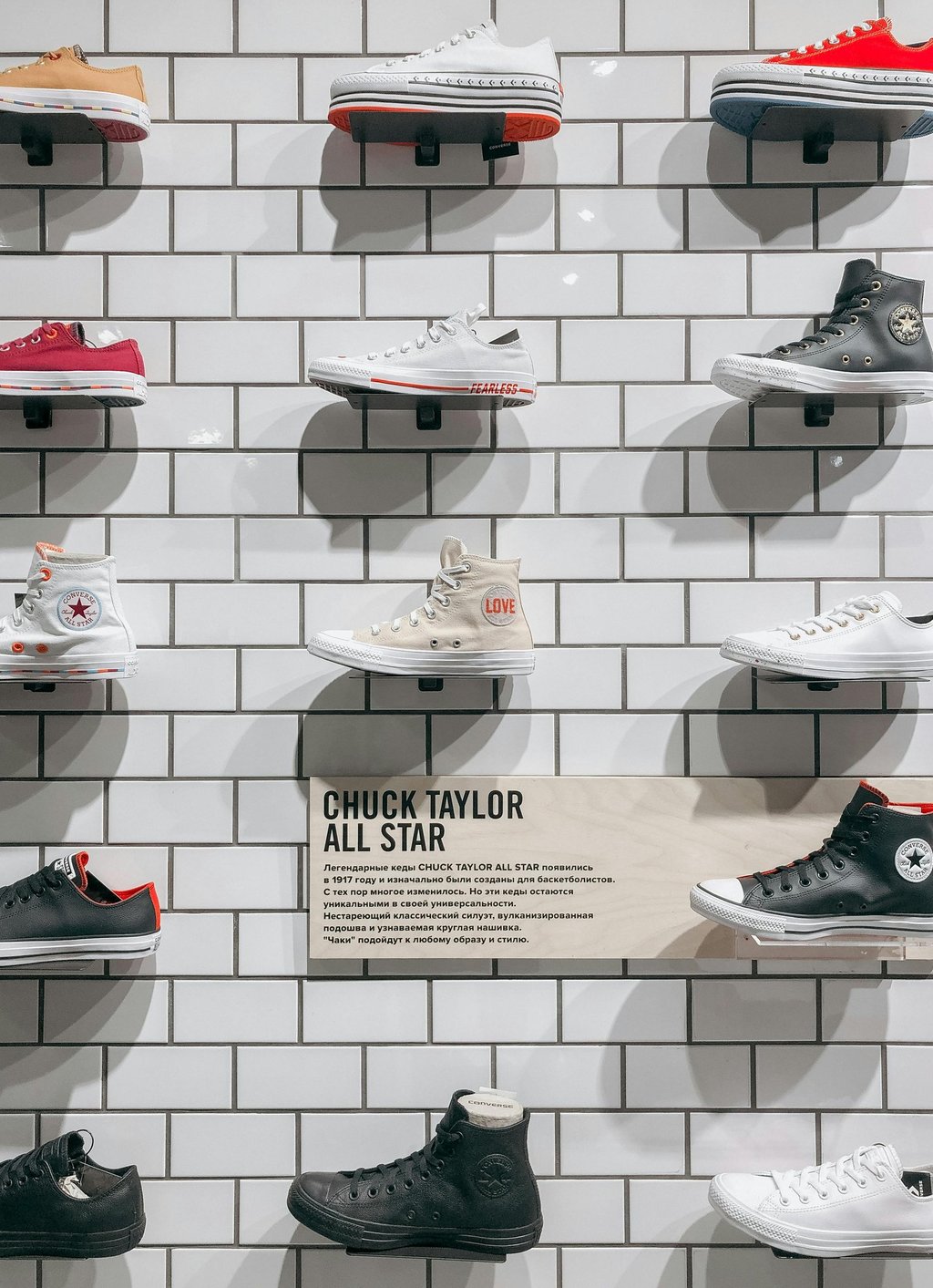
The 7 Ps of the Marketing Mix: Place & Why Tesco Does Not Sell Your Favourite Trainers
Target question:
What is the difference between 'place' and 'location' in IB Business Management?
The new limited-edition Nike Jordans just dropped. You've been saving up for months, you've got the money ready, and you're prepared to queue at 6am if needed. There's just one slight problem - they're only sold in three shops in the entire UK, none of which are anywhere near you. Meanwhile, your friend in London walks into Foot Locker on Oxford Street and snags the last pair in your size.
Frustrating, right? That's the importance of place in the marketing mix. Nike could release the best trainers in the world (product), priced perfectly for hypebeasts (price), with marketing that's gone viral on TikTok (promotion), but if you can't actually get them? Game over.
Place isn't about where Nike's factory is in Vietnam or where their headquarters sits in Oregon. Place is about you - the customer - and how ridiculously easy (or annoyingly difficult) it is for you to get your hands on what you want to buy.
Place & Distribution Channels: IB Business Management Definitions
IB Business Management definition - Place:
Refers to where and how customers can actually buy a product - not to be confused with location, which is where a business physically operates from (like a factory or head office).
IB Business Management definition - A distribution channel:
Is the route a product takes from producer to consumer, ranging from zero intermediaries to several businesses handling the product along the way.
IB Business Management definition - A zero-channel network (direct distribution):
Sells a product straight from producer to consumer with no intermediaries at all, giving the business full control over pricing, messaging and customer experience.
IB Business Management definition - Retailers:
Are businesses that sell directly to the final consumer, such as Tesco or Zara, offering convenience and choice but adding cost through rent, staff and premises.
IB Business Management definition - Wholesalers:
Buy large quantities directly from manufacturers and sell smaller amounts on to retailers - a process known as "breaking bulk" - allowing small retailers to order manageable quantities.
IB Business Management definition - E-commerce:
Is the buying and selling of products online, offering low costs, global reach, and rich customer data compared to physical retail.
The key IB Business Management exam principle: define place correctly (access, not location), identify which type of distribution channel is being used, and explain why it suits the specific product using factors like purchase frequency, price and image, customer location, competition, budget, desired control, and legal restrictions - always backed with a real business example.
What Is "Place" in Marketing?
Place and location are NOT the same thing in business studies. They sound identical, but are not the same at all.
Location = Where the business physically sits (like where Amazon's massive warehouses are)
Place = Where you can actually buy the product (like the Amazon app on your phone at 2am when you're panic-buying a birthday present you forgot about)
Place is basically the answer to: "Where can I get this stuff?" And for businesses, it's about making sure the answer is: "Everywhere you'd look for it."
IB Business Management Real-life Example:
Think about Coca-Cola. You can buy it at Tesco, Sainsbury's, your local corner shop, McDonald's, that sketchy vending machine at your college, petrol stations, cinemas, and probably about 50 other places you walk past daily. That's not by accident - that's Coca-Cola getting their distribution strategy just right.
Distribution Channels: How Your Stuff Actually Gets to You
So how does a product go from being made in a factory somewhere to ending up in your shopping bag? Answer: distribution channels. These are basically the routes products take to reach you, and they can be straight-forward or hugely complicated.
Let me break this down with a story that'll make it stick...
Imagine you're a farmer in Devon who's just harvested the most incredible organic strawberries. How do you get them to customers? You've got options:
The "I'll Do It Myself" Option (Zero-Channel Network)
You could set up a little stall at the end of your farm lane and sell directly to people driving past. No middleman, no complications - just you, your strawberries, and customers handing over cash. This is called direct distribution or a zero-channel network because there are literally zero intermediaries (or "people in the middle") between you and the customer.
IB Business Management Real-life Examples:
Your local hairdresser, that driving instructor who taught you to parallel park (badly), or even Tesla, who famously refuse to sell through traditional car dealerships and only sell direct to customers.
The "I Need Some Help" Option
But strawberries don't last long, and standing by a farm gate all day isn't exactly living the American dream. So you might use intermediaries - businesses that help get your product out there. Here's how it escalates:
Let's Break Down the Main Players
Direct Distribution: Cutting Out the Middleman
Remember when I mentioned Tesla? They're obsessed with controlling the entire customer experience, which is why you can't just walk down your local car dealer and haggle over a Model 3. You've got to go through Tesla directly - either online or at their own showrooms.
The internet has completely transformed direct distribution. Back in the day, if you wanted to sell direct, you needed expensive shops or a door-to-door sales team (imagine that life). Now? Upload your products on Amazon, eBay, your own website, or even TikTok Shop, and boom - you're selling direct to millions of potential customers from your bedroom.
IB Business Management Real-life Example:
Look at Gymshark. Started by a teenager called Ben Francis who was making gym clothes in his parents' garage, selling them directly through social media and a basic website. No retail stores needed. Now they're worth over a billion quid. That's the importance of direct distribution in 2025.
Retailers: The Shops You Actually Know
Retailers are the businesses that sell directly to you - think Tesco, Zara, Currys, or that Greggs you visit maybe too often for your own good. They're the final stop before a product lands in your hands.
Here's what's interesting about retailers: they offer choice and convenience. You don't have to track down 47 different manufacturers to do your weekly food shop - Tesco's already got it all under one roof. But this convenience comes at a cost (literally). Retailers have to pay massive rent for prime locations, staff wages, electricity bills for those industrial freezers, and all the fancy in-store displays. All those costs? Yeah, they get passed on to you through higher prices.
That's why buying directly from a manufacturer's website is often cheaper - there's no Tesco taking their cut in the middle.
Quick IB Business Management exam tip: Don't confuse retailers with wholesalers! Retailers sell to YOU (the consumer). Wholesalers sell to OTHER BUSINESSES. Dead simple, but students mix these up all the time.
Wholesalers: The Heroes You Never See
Wholesalers are like the middle managers of distribution - they're crucial but you probably never think about them. Here's how they work:
Wholesalers buy massive quantities directly from manufacturers (we're talking lorry-loads), then sell smaller amounts to retailers. This process is called 'breaking bulk', which sounds a lot more complicated than it actually is.
Why are Wholesalers relevant? Well, imagine you run a small corner shop. You can't afford to buy 10,000 cans of Red Bull directly from the manufacturer - where would you even store them? Plus, the manufacturer doesn't want to deal with thousands of tiny orders. The wholesaler buys the 10,000 cans, then sell you just 50 at a time whenever you need them.
IB Business Management Real-life Example:
Booker Wholesale (owned by Tesco now) supplies hundreds of thousands of independent shops, cafés, and restaurants across the UK. Your local chicken shop, that newsagent where you buy meal deals, the café where you get your overpriced coffee - there's a solid chance Booker supplies them all.
Mail Order: Home Shopping At Its Best
Before the Internet, TikTok Shop and next-day Amazon Prime, there was mail order. Massive catalogues (like phone books but for shopping) would land on doorsteps, people would circle what they wanted with a pen, fill in an order form with the items and reference numbers, post it off, then wait weeks for their stuff to arrive.
It was a different world and a different mentality. But companies like Argos built their entire empire on this model. Even now, loads of businesses still use mail order, just with a few modern features - think online catalogues instead of the heavy paper versions your gran used to have and online order forms.
E-Commerce: The Game-Changer
And then someone brought the internet, and everything changed.
E-commerce (electronic commerce, if we're being exact) is just buying and selling stuff online. But let's be honest - It has revolutionised how we shop completely.
COVID-19 absolutely turbocharged this trend. During lockdown, when physical shops were shut, businesses that already had solid e-commerce channels survived. Those that didn't? Many went bust. Look at much loved Debenhams - a department store that had been around since 1778! but couldn't adapt fast enough to online shopping. Gone.
Meanwhile, ASOS, which started as a pure online retailer in 2000, is now worth billions and sells to customers in 237 countries. They don't have a single physical shop. That's the power of e-commerce as a distribution channel.
Why's it so effective?
Low costs: No expensive rent for high street shops, fewer staff needed
Global reach: Someone in Australia can buy from a UK business at 3am on a Tuesday
Convenience: Shop in your pyjamas, compare prices instantly, read reviews before buying
Data: Businesses can track exactly what you're looking at and tailor recommendations
IB Business Management Real-life Example:
Here's something interesting happening right now in 2025-2026: some online-only brands are actually opening physical shops. Gymshark opened their first permanent store in London in 2022. Why? Because sometimes people want to touch products, try them on, and get that instant gratification of walking out with their purchase. It's all about finding the right mix / combination of distribution channels.
IB Business Management - Syllabus and Programme Full Guide →
How Do Businesses Actually Choose Their Distribution Channels?
You can't just throw your product everywhere and hope for the best. Businesses need to think carefully about which distribution channels make sense. Here's what they consider:
1. Type of Product
Selling fresh sushi? You need distribution channels that get it to customers FAST before it goes off.
IB Business Management Real-life Example:
That's why Itsu and Pret have shops on every corner in London - perishable food needs rapid distribution.
Selling a private jet? You're probably not setting up a vending machine for that. Expensive, technical products need specialist distributors who can explain the features and handle the complicated sales process.
Custom-made wedding dress? Direct distribution all the way - you need to work closely with each client.
2. How Often People Buy It
Think about how often you buy bread versus how often you buy a mattress. Bread = daily, everywhere, needs to be in every corner shop and supermarket. Mattress = once every 10 years, so specialist stores like Dreams are fine.
IB Business Management Real-life Example:
This is why there are 13,000+ McDonald's restaurants across Europe but only a handful of Rolls-Royce dealerships in the entire UK.
3. Price and Image
Rolex watches aren't sold in Sports Direct (thank god). Luxury products need exclusive distribution to maintain their premium image. You'll only find Rolex in a select few authorised dealers, and that scarcity is part of the appeal.
Compare that to Coca-Cola or Walkers Crisps - they want to be EVERYWHERE because mass-market products need mass distribution.
4. Where Your Customers Actually Are
Live in a tiny village in rural Scotland? E-commerce becomes pretty essential because the nearest shop might be 20 miles away.
Selling to customers in Japan but your business is in Birmingham? You'll need agents or distributors who understand the Japanese market, speak the language, and know the local business culture.
5. Where Your Competitors Are Selling
If Pepsi is in Tesco, you can bet Coca-Cola wants to be there too. If your rival is selling through Amazon, you probably should be there as well. Businesses compete head-to-head using the same distribution channels.
But sometimes they do the opposite - luxury brands like Chanel deliberately avoid Amazon to maintain their exclusive image.
6. Your Budget
Setting up a network of physical shops across the country costs MILLIONS. That's why so many small businesses start with e-commerce - it's way cheaper. As they grow and make more money, they can then add more distribution channels.
IB Business Management Real-life Example:
Look at Innocent Smoothies. Started by three mates selling smoothies at a music festival in 1999 (Real entrepreneur origin story). They couldn't afford nationwide distribution initially, so they started small, built up cash, then gradually expanded into more and more retailers. Now they're in basically every supermarket and corner shop in the UK.
7. How Much Control You Want
Here's a trade-off that's vital for you to understand: The more intermediaries you use, the less control you have over how your product is marketed and sold.
If you sell direct (zero-channel), you control everything - the pricing, the messaging, the customer experience, the lot.
But if you're using a three-channel network (manufacturer → agent → wholesaler → retailer → customer), you've got three different businesses handling your product before it reaches the customer. Each one might market it differently, display it weirdly, or not understand your brand vision. Communication gets messy, and you're kind of hoping everyone along the chain does a decent job.
IB Business Management Real-life Example:
That's why Apple is so controlling about their retail experience - they want Apple Stores to look and feel exactly the same whether you're in Birmingham or Beijing.
8. Legal Stuff You Can't Ignore
Some products have legal restrictions on where and how they can be sold:
Prescription medicines = pharmacies only
Alcohol = need a license, age restrictions
Fireworks = licensed sellers, time restrictions around Guy Fawkes Night
Knives = age restrictions, can't be sold via vending machines (obviously)
These and other legal considerations massively limit distribution channel options.
IB Business Management Real-life Example: How Shein Conquered the World
Let's talk about Shein, because their distribution strategy perfectly demonstrates how e-commerce can disrupt entire industries.
Shein is a Chinese fast-fashion company that's become massive (especially with Gen Z) despite having ZERO physical shops for most of their existence. They're entirely e-commerce-based, shipping directly from manufacturers in China to customers worldwide.
Their distribution strategy:
Pure e-commerce: Website and app only - no retail stores (until very recently)
Direct from manufacturer: Skip intermediaries to keep prices insanely low
Speed: New designs go from concept to your door in about 10 days
Social media integration: Influencers promote directly to TikTok/Instagram, driving sales through the app
The result? Shein became one of the world's most valuable start-ups, worth over $60 billion, selling in 150+ countries - all without traditional retail distribution. They've fundamentally changed what's possible with e-commerce distribution.
(Though they've now started opening some pop-up shops, the first one in Paris, in early November 2025 because, as mentioned earlier, sometimes physical presence matters too.)
Practise This Topic: The IB Business Management Activity Book
Place and distribution questions reward students who move through the full structure - define place correctly, name the channel, apply the relevant factors, then evaluate. The Activity Book's Unit 4.5 gives you exactly that kind of structured case study practice.
The IB Trainer's IB Business Management Activity Book covers:
✓ All 6 IB Business Management modules (5 Modules + the Complete IB Business Management Toolkit broken down unit-by-unit
✓ 2-6 case studies per unit (some units need more practice than others)
✓ Every IB Business Management Assessment Objective (AO) explicitly addressed
✓ All 15 IB Business Management Toolkit tools with worked examples
✓ IB Business Exam Socially responsible companies (business as force for good)
✓ Platform access with supporting video content
IB Business Management Exam Gold
When you're tackling place/distribution questions in your IB exams, remember this structure:
Define what place actually means (not location! It's about customer access!)
Identify the distribution channel (zero/one/two/three-channel - which intermediaries are involved?)
Explain why this channel works for this specific product (consider the 8 factors: product type, purchase frequency, price, customer location, competition, market size, budget, control, legal factors)
Use real business examples (examiners LOVE when you reference actual companies to show your understanding, like Tesla, ASOS, Shein, etc.)
Discuss advantages AND disadvantages (no distribution channel is perfect - they all have trade-offs)
Final Thought For Your IB Business Management Course
You can have the most incredible product in the world, but if customers can't buy it easily, you've got nothing. Distribution is often the difference between a successful business and one that fails.
Think about it: Netflix's entire business model is built on distribution convenience. They didn't invent TV shows or films - they just made accessing them ridiculously easy. One app, every device, anywhere, anytime. That's the power of getting your distribution strategy spot on.
So next time you're panic-buying something on Amazon at midnight, or grabbing a meal deal from Tesco Express, or waiting for that ASOS order to arrive, you're witnessing distribution channels in action but with an obvious difference: You know now how they work.
Stay well,
Frequently Asked Questions: Place & Distribution Channels In IB Business Management
What is the difference between "place" and "location" in IB Business Management?
Location refers to where a business physically operates from, such as a factory or head office, while place refers to where and how customers can actually buy the product - the Coca-Cola example in this entry, available in dozens of different outlets, shows place in action. The distinction matters because a business can have a great location and still fail on place if customers can't easily access what it sells, as the limited-edition Nike Jordans example shows.
What is the difference between a retailer and a wholesaler?
Retailers sell directly to the final consumer, like Tesco or Zara, offering convenience but adding costs like rent and staff that get passed on through higher prices. Wholesalers buy large quantities from manufacturers and sell smaller amounts on to retailers - a process called "breaking bulk" - which is why a corner shop can order 50 cans of a drink instead of 10,000. Wholesalers like Booker sell to other businesses, not directly to consumers, which is the key distinction students often confuse in exams.
What is direct distribution and why do businesses like Tesla use it?
Direct distribution (a zero-channel network) sells a product straight from producer to consumer with no intermediaries, giving the business full control over pricing, messaging and customer experience. Tesla refuses to sell through traditional dealerships specifically to protect that control, while Gymshark used direct e-commerce distribution to grow from a garage business to a billion-pound brand without ever needing retail stores. The trade-off is that a business handles all its own marketing, sales and logistics rather than sharing that work with intermediaries.
What factors determine which distribution channel a business chooses?
Businesses weigh up product type (perishable goods like sushi need fast distribution), purchase frequency (bread needs to be everywhere, mattresses don't), price and image (luxury brands like Rolex use exclusive distribution), customer location, competitor channels, budget, how much control they want to keep, and legal restrictions on certain products like alcohol or prescription medicines. Innocent Smoothies illustrates the budget factor well, starting with tiny-scale direct sales at a festival before gradually expanding into supermarkets as they grew.
How did Shein disrupt the fashion industry through its distribution strategy?
Shein built its entire business on pure e-commerce distribution, shipping directly from manufacturers in China to customers worldwide with no traditional retail stores for most of its existence. By skipping intermediaries and combining that with rapid design-to-delivery speed (around 10 days) and heavy social media integration, they kept prices extremely low and became one of the world's most valuable start-ups, worth over $60 billion. Even Shein has recently started experimenting with physical pop-up shops, showing that even the most e-commerce-native brands sometimes still need a physical presence.
Related Content:
Continue Learning: IB Business Management Blog
IB Business Promotion Strategies - worth reading alongside this entry, since a promotional campaign only works if customers can actually find and buy the product it's promoting.
IB Business People, Processes & Physical Evidence - the natural next step, covering the remaining three of the 7Ps that shape the customer experience once they've found where to buy.
IB Business Management Toolkit - sales forecasting and its statistical adjustments sit within the 15 Toolkit tools, so this is where students can see related quantitative techniques.
IB Business Management Marketing - this is the 11th entry of the Marketing module, so this hub is the best next stop for an overview of everything else Module 4 covers.
IB Business Management - for the full course overview, syllabus breakdown and links into every other module.
Take Your Revision Further
Once you can identify a distribution channel and justify it against the eight key factors, the next step is practising that judgement on full exam-style case studies. The IB Business Management Activity Book gives you exam-standard questions, model answers and marking schemes across every module - including the Marketing chapter this topic belongs to.
Explore the IB Business Management Activity Book here.
© Theibtrainer.com 2012-2026. All rights reserved.
Legal
Have a Tip? Send us a tip using our anonymous form