IB Economics The World Trade Organisation
Discover how the WTO referees global trade! Learn its rules, functions, and real-world impact with examples that will help you ace your IB Economics exams.
IB ECONOMICS HLIB ECONOMICSIB ECONOMICS THE GLOBAL ECONOMY / INTERNATIONAL TRADEIB ECONOMICS SL
Lawrence Robert
5/2/202510 min read
The WTO Explained: The World's Trade Referee (That Nobody Fully Listens To)
Target Question:
What is the WTO and how effective is it in IB Economics?
If you like football imagine for a second a football match with no referee. No offside rule. No penalties. Rich clubs with bigger squads can foul the rest continuously, buy up all the best players, and nobody can stop them. Smaller clubs just have to deal with it.
That was essentially global trade before 1995.
Now imagine that suddenly a referee turns up. Has a rulebook. Can technically issue red cards. But the biggest clubs write most of the competition rules and the referee has no power to physically enforce anything. Half of the players are ignoring the whistle because they know the consequences are non-existent.
Well, this referee is basically the World Trade Organisation. Both, flawed and imperfect but at the end of the day, it is the closest thing the world has to a fair referee for international trade - and arguably the main reason why global commerce doesn't explode into full-on economic warfare.
Where Did the WTO Come From?
To understand the WTO, you need to go back to the late 1940s. The world had just survived two catastrophic World Wars, the second of which was partly fuelled by the protectionist trade policies of the 1930s - countries slapping tariffs on each other in a spiral of retaliation that collapsed global trade, deepened the Great Depression, and contributed to the conditions that made fascism politically attractive.
World leaders thought: we cannot let that happen again. In 1947, 23 countries signed the General Agreement on Tariffs and Trade (GATT) - a set of rules designed to progressively reduce tariffs and open up global trade. It was imperfect and limited, but it worked well enough to promote an expansion of global trade in the post-war decades.
By the 1990s, though, global trade had become increasingly elaborated, covering services, intellectual property, and foreign investment and GATT wasn't designed to cope with this.
The WTO was established in 1995 when 123 countries replaced the General Agreement on Tariffs and Trade (GATT), giving international trade governance a permanent secretariat and formal dispute settlement system.
So in 1995, 123 countries replaced GATT with the WTO, giving the new organisation a permanent secretariat, a dispute settlement system, and a broader mandate.
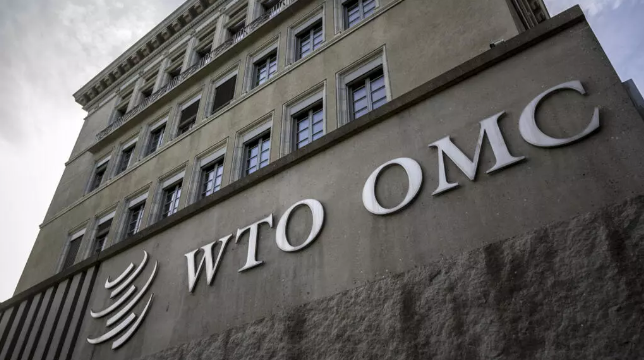
The World Trade Organization (WTO) is the largest international economic organisation in the world, with 164 member states, facilitating approximately 98% of global trade.
Today, the WTO employs over 640 professionals in Its Geneva headquarters: lawyers, economists, statisticians, trade specialists. It is, in theory, at the core of a rules-based international trading system.
What Does the WTO Actually Do? The Five Objectives
The WTO is not just about eliminating tariffs. Its mandate is broader - and more elaborated - than that. Here are its five core objectives:
1. Non-Discrimination
This is the WTO's foundational principle, built around a concept called Most Favoured Nation (MFN) status.
IB Economics definition - Most favoured nation (MFN):
Most Favoured Nation (MFN) status is the WTO's core non-discrimination principle: any trade concession granted to one member must be applied equally to all other WTO members.
So, the rule is simple: if you grant a trade concession to one WTO member, you must grant it to all of them. You can't give Country A a lower tariff and charge Country B more - that would be discrimination.
IB Economics Real-life example:
When the US cut tariffs on Japanese cars, it was legally obliged under WTO rules to apply the same reduction to cars from Germany, South Korea, and Mexico. The discount can't be exclusive.
There's also a related principle: national treatment - foreign goods, once they've cleared customs, must be treated no less favourably than domestically produced goods. You can't charge foreign firms higher taxes, impose stricter regulations, or otherwise penalise them after they've entered your market.
2. More Open Trade
The WTO encourages and to some extent, pushes member nations to reduce or eliminate artificial trade barriers progressively - tariffs, subsidies, quotas, and trade embargoes. The key concept here is "artificial": barriers that distort market outcomes and disadvantage efficient producers.
Since 1947, average global tariffs on manufactured goods have fallen from around 22% to under 5%. That's a remarkable achievement - and the WTO (and GATT before it) deserves significant credit for it.
3. Predictable and Transparent
Businesses and investors don't invest in trade if the rules keep changing overnight. The WTO creates stability and predictability - member countries have to commit to maximum tariff levels ("bound rates") and publish their trade policies transparently. Firms can plan supply chains, enter new markets, and sign long-term contracts with reasonable confidence that the trade environment won't suddenly shift.
On paper this is the trade equivalent of a country having a stable, published legal system. You might not love every law, but at least you know what the rules are and you can plan according to what is going to happen.
4. More Competitive
The WTO actively discourages unfair trading practices. Two big targets:
Export subsidies - government payments that artificially lower the price of a country's exports, giving them an unfair advantage
Dumping - where firms (often with government backing) sell products in foreign markets below their cost of production to undercut local competitors and grab market share
IB Economics definition - Dumping:
Dumping, as defined under WTO rules, occurs when firms sell products in foreign markets below their cost of production in order to undercut local competitors and gain market share.
IB Economics Real-life example:
China has faced numerous WTO complaints about export subsidies and dumping - most famously for dumping cheap steel into global markets throughout the 2010s, which devastated steel industries in the EU and the US. In 2016, the EU imposed anti-dumping duties of up to 73.7% on Chinese steel imports, following WTO-compliant procedures.
5. More Beneficial for Less Developed Countries
The WTO officially recognises that low-income countries need extra support. They receive extended timeframes to implement trade commitments, access to technical assistance, and in theory, preferential treatment in trade negotiations.
Whether this works in practice is an entirely different question - and one that your IB Economics teacher will want you to address critically.
Bonus Objective: Environmental Protection
WTO agreements encourage member countries to implement measures to protect their natural environments, public health, animal welfare, and plant health. However - crucially - these measures must be non-discriminatory. If you restrict foreign firms for environmental reasons, those same restrictions must apply to domestic firms. You can't use "environmental protection" as a disguised form of protectionism. The WTO will see through it.
For access to all IB Economics exam practice questions, model answers, IB Economics complete diagrams together with full explanations, and detailed assessment criteria, explore the Complete IB Economics Course
How Does the WTO Work? The Five Functions
1. Trade Negotiations
The WTO operates through negotiation "Rounds" - multilateral meetings where member countries collectively agree to reduce trade barriers. The most ambitious was the Doha Development Round, launched in Qatar in 2001 with the explicit aim of making trade rules fairer for developing countries.
The Doha Development Round, launched in 2001 with the aim of making global trade fairer for developing countries, has never been concluded - making it the WTO's most prominent unresolved multilateral negotiation.
So, over two decades of talks, collapsed agreements, and bitter disputes:
High-income WTO members, including the US and EU, continue to provide substantial agricultural subsidies to domestic producers - a practice that restricts market access for low-income countries and contradicts the WTO's stated objectives.
So, the disputes are primarily between rich nations wanting their agricultural subsidies protected and developing nations wanting a genuine market access - have left the Doha Round in permanent limbo. It's the WTO's most visible failure, and a reminder of how hard genuine multilateral consensus actually is.
2. Implementation and Monitoring
Members are required to publish their trade policies transparently and submit them for regular review. The WTO's Trade Policy Review Body monitors whether countries are complying with their commitments. This creates accountability - or at least a paper trail of non-compliance that can be referenced in future disputes.
3. Dispute Settlement
Arguably the WTO's most powerful function. When one country believes another is violating WTO rules, it can file a formal complaint.
IB Economics definition - WTO's Dispute Settlement body (DSB):
The WTO's Dispute Settlement Body (DSB) acts as an impartial arbitrator, examining trade complaints between member countries and authorising retaliation if a losing party fails to comply with rulings.
So, the Dispute Settlement Body (DSB) acts as an impartial arbitrator - examining the complaint, assessing it, and authorising retaliation if the losing party doesn't comply.
IB Economics Real-life example:
The Banana Wars. The EU gave preferential access to banana imports from Caribbean nations (former colonies) over cheaper Latin American bananas. The US (on behalf of Chiquita and other US-owned Latin American operators) complained to the WTO. After years of disputes and authorised counter-tariffs on European goods - including cashmere from Scotland and bath products - the EU eventually reformed its banana import rules in 2012. The WTO's dispute mechanism worked, but it took 17 years.
4. Building Trade Capacity
The WTO provides technical assistance and training for low-income countries - helping their trade officials understand WTO rules, negotiate agreements, and implement commitments. Extended deadlines for compliance are built into agreements for less developed members.
5. Outreach
The WTO collaborates with the IMF, World Bank, OECD, NGOs, and media to build global understanding of trade issues and coordinate economic cooperation. It's the WTO's "soft power" function - shaping the global conversation about trade policy beyond formal negotiations.
Every episode of Pint-Sized links back to what matters most for your IB Economics course:
Understanding key IB Economics concepts
Applying them in real-world IB Economics contexts
Building IB Economics course confidence without drowning in dry theory.
Subscribe for free to exclusive episodes designed to boost your IB Economics grades and confidence
How Effective Is the WTO? The Critical Evaluation
The WTO sounds great in theory. In practice, two structural problems limit its effectiveness.
IB Economics - Syllabus and Programme Full Guide →
Problem 1: Agricultural Subsidies and Primary Products
Despite WTO commitments to reducing trade barriers, high-income countries - particularly the US and the EU - continue to provide enormous agricultural subsidies to their domestic farmers. The EU's Common Agricultural Policy (CAP) distributes around €55 billion annually to European farmers. The US Farm Bill runs to hundreds of billions of dollars over multi-year cycles.
What does this mean in practice? A Kenyan flower farmer, a Brazilian soya producer, or an Indian cotton grower is competing not just against American or European farmers - they're competing against those farmers plus the US and EU government treasuries. That's not fair on paper. It directly contradicts the WTO's stated objective of creating trade opportunities for low-income nations.
Meanwhile, rich countries continue to impose tariffs on primary products from developing nations - these are the primary exports these countries depend most on. The WTO has struggled to force meaningful reform here, because the countries with the most agricultural subsidies are also the countries with the most power within the organisation.
Problem 2: Unequal Bargaining Power
The WTO has 164 members. The vast majority are low-income or middle-income countries. Yet trade negotiations are dominated by the countries with the largest economies - the US, EU, China, Japan. These countries have larger delegations, more experienced negotiators, and significantly more economic leverage.
IB Economics definition - Unequal Bargaining Power:
Unequal bargaining power within the WTO means that trade agreements tend to reflect the priorities of wealthier member nations, leading critics to describe the organisation as structurally biased towards economically powerful countries.
As a result, trade agreements tend to reflect the priorities of wealthy nations. Critics - including top economists like Joseph Stiglitz and Ha-Joon Chang - argue the WTO is structurally biased towards economically powerful countries, using the language of free trade to open up developing country markets whilst protecting sectors that matter to the most powerful members.
The statistics back this up: a 2019 study found that the average WTO member country with high income had 14 trade lawyers working on disputes, compared to fewer than 2 for the average low-income member. Whoever writes the argument usually wins it.
IB Economics Diagrams Programme, What's included:
200+ exam-ready diagrams covering the entire IB Economics syllabus
Video for every diagram showing you exactly how each model looks
Image version perfect for modelling diagrams in you essays, presentations, and your IA
Detailed written explanations of the IB Economics theory behind each diagram
Both SL and HL IB Economics diagrams clearly labelled and organised by topic
Real IB Economics exam application showing how to use diagrams effectively in Paper 1 and Paper 2
IB Economics The WTO Summary
The WTO is basically humanity's best attempt to create a rules-based system for global trade - and on some metrics, it has genuinely succeeded. Tariffs on manufactured goods are at historic lows. Disputes get resolved through legal mechanisms rather than economic warfare. Developing countries have a seat at the table that didn't exist in the colonial era.
But the WTO is also a political institution operating in a world of power imbalances. Rich countries bend rules through agricultural subsidies. Negotiations stall because powerful members refuse to make concessions. Dispute resolution is slow and the enforcement mechanism - authorised retaliation - is only really effective for large economies that can impose significant trade consequences.
For your IB Economics essays: acknowledge both sides. The WTO isn't useless or playing at the level it claims to be. The most convincing argument is usually that the WTO is better than the current alternative - a world without any trade referee - while being honest about the structural limitations the WTO currently has that prevent it from achieving its stated goals and support the world's poorest economies.
Frequently Asked Questions: The WTO (IB Economics)
Q1: What is the WTO and what does it do?
A: The WTO (World Trade Organisation) is the world's largest international economic organisation, with 164 members covering 98% of global trade. It promotes trade liberalisation, oversees multilateral trade agreements, and resolves disputes between member countries.
Q2: What are the main objectives of the WTO?
A: The WTO's five main objectives are: non-discrimination (Most Favoured Nation status), more open trade (reducing barriers), predictability and transparency, greater competition (discouraging dumping and export subsidies), and better trade outcomes for less developed countries.
Q3: What is Most Favoured Nation (MFN) status in the WTO?
A: MFN status means that any trade concession granted to one WTO member must be extended to all other members. Countries cannot discriminate between trading partners - a lower tariff for one must apply to all.
Q4: How effective is the WTO at promoting fair trade for developing countries?
A: Effectiveness is limited by two main problems: rich countries (especially the US and EU) continue using large agricultural subsidies that block developing country exports, and unequal bargaining power means negotiations tend to favour wealthier nations with larger, better-resourced delegations.
Q5: What is the Doha Round and why is it relevant for IB Economics?
A: The Doha Development Round was launched in 2001 to make trade rules fairer for developing countries. It has never been concluded due to disagreements between rich and developing nations - primarily over agricultural subsidies - illustrating the WTO's limitations when reaching multilateral consensus.
Stay well,
More Information About:
IB Economics your IB Economics daily guide
IB Economics The Global Economy access The WTO here as well as the rest of the module 4
IB Economics Activity book Module 4 The Global Economy Unit 4.5 for The WTO exam practice, activities, model answers and IB Economics Marking schemes
IB Economics Subsidies, for relevant information on subsidies, agricultural subsidies and production subsidies all relevant to the WTO entry
IB Economics Benefits of International Trade - Explore this topic, comparative advantage is why those benefits exist
IB Economics Trade Protection - Check what happens when trade is restricted in case you don't know yet
IB Economics Economic Integration all integration material is relevant to the WTO topic, have a look at it, explore possible connections
IB Economics Economic Integration and Trading Blocs trading blocs have a direct explicit relationship with the WTO, link ideas and establish relationships
Read Next: IB Economics Exchange Rates
© Theibtrainer.com 2012-2026. All rights reserved.
Legal
Have a Tip? Send us a tip using our anonymous form